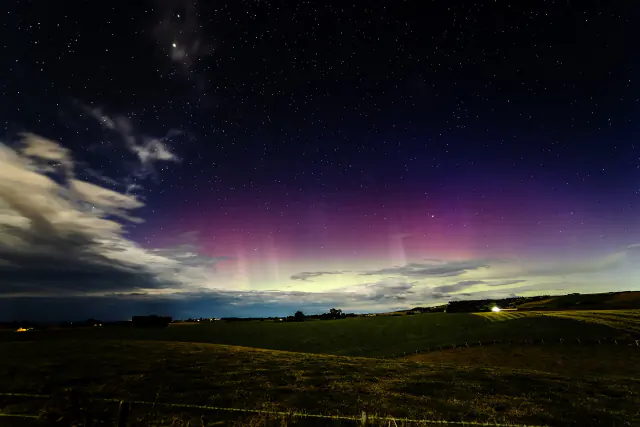
Northern Lights Destination
Northern Lights in Iqaluit, Canada
In Iqaluit, the northern lights dance above vast Arctic tundra and the frozen expanse of Frobisher Bay — an aurora experience intertwined with living Inuit culture.
Aurora Viewing in Canada's Arctic Capital
Iqaluit at 63.75°N lies deep within the auroral oval, requiring only KP 2 for visible aurora. The city's location on Baffin Island in the eastern Canadian Arctic means it experiences different geomagnetic conditions than western aurora destinations, sometimes catching aurora events that miss locations like Yellowknife.
The surrounding treeless tundra provides completely unobstructed views of the sky in every direction. There are no forests, hills, or tall buildings to block the horizon — just vast expanses of snow and rock under the dancing lights. This open landscape means the aurora appears to stretch from one edge of the Earth to the other.
Iqaluit also offers the opportunity to learn about the Inuit relationship with the aurora. In Inuit tradition, the northern lights (called aqsarniit) are believed to be spirits of the dead playing a ball game across the sky. Local cultural experiences add a profound dimension to the aurora viewing experience.
Where to Watch the Northern Lights in Iqaluit
The frozen expanse of Frobisher Bay is the most dramatic viewing location. Walking or snowmobiling out onto the sea ice provides a completely flat, unobstructed platform with the aurora reflected in the ice and snow. The experience of standing on frozen ocean under the dancing lights is profoundly moving.
Sylvia Grinnell Territorial Park, just outside the city, offers tundra walking trails and a river valley setting. The park's distance from city lights makes it one of the closest dark-sky locations to downtown Iqaluit.
The Road to Nowhere — the short highway that extends west from Iqaluit before simply ending in the tundra — provides accessible roadside viewing with progressively darker conditions as you drive further from town. The hills surrounding Iqaluit offer elevated viewpoints where the entire panorama opens up.
Getting to Iqaluit and Practical Information
Iqaluit is accessible only by air — there are no roads connecting Nunavut to southern Canada. Canadian North and First Air operate daily flights from Ottawa (approximately 3 hours). Flights can be expensive, often $800–1,500 CAD round trip, so booking well in advance is recommended.
Accommodation is limited and priced at a premium reflecting the Arctic location. The Frobisher Inn and Discovery Lodge Hotel are the main options. Restaurants and shops exist but with limited selection and high prices — everything must be flown in. Some visitors supplement with food brought from the south.
Winter temperatures range from -25°C to -40°C with significant wind chill from Arctic winds. Full Arctic clothing is essential. Hiring a local Inuit guide is highly recommended both for safety on the sea ice and tundra and for cultural insights into the land and the aurora. Several local operators offer guided snowmobile excursions to prime viewing locations.
Plan the trip
Getting to Iqaluit
Aurora trips need three things booked together: a flight into the right airport, somewhere dark to stay, and usually a car, because the sky you get is the sky above wherever you can drive to that night.
Compare flightsLive fares into Iqaluit Airport (YFB), the closest airport to Iqaluit.
Affiliate links. Booking through them costs you nothing extra and helps keep this site running.
Borealis App
Aurora forecasts, social feed & Hunter Ranks
Frequently Asked Questions
Iqaluit is only accessible by air. Canadian North operates daily flights from Ottawa (about 3 hours). Flights typically cost $800-1,500 CAD round trip. There are no roads connecting Iqaluit to southern Canada. Book flights well in advance, especially during peak travel seasons.
Yes, Iqaluit is one of the most expensive destinations in Canada. All goods must be flown in, so food and accommodation costs are significantly higher than southern Canada. Budget $300-500 CAD per day for accommodation, meals, and activities. Guided tours add additional costs.
October through March offers the best aurora viewing, with December and January providing the longest nights (20+ hours of darkness). February and March are popular for combining longer days with still-long nights and increasing geomagnetic activity around the spring equinox.
Sea ice viewing can be spectacular but requires local knowledge. Hiring an Inuit guide is strongly recommended — they understand ice conditions, tidal cracks, and polar bear safety. Never venture onto sea ice alone or without proper safety equipment and communication devices.
Related Articles
Destination
Northern Lights in Kuujjuaq
Kuujjuaq, the largest community in Nunavik (northern Quebec), offers a rarely visited aurora destination with pristine A...
Destination
Northern Lights in Yellowknife
Yellowknife is widely regarded as the aurora capital of North America. Situated beneath the auroral oval, this Northwest...
Destination
Northern Lights in Churchill
Churchill, Manitoba, is famous worldwide as the polar bear capital, but it is also one of Canada's finest aurora destina...