Northern Lights Destination
Northern Lights in Kolari, Finland
Kolari sits on the Muonionjoki River at the Finnish-Swedish border - the gateway to Ylläs fell offers authentic Lapland aurora viewing with river reflections and genuine wilderness character.
Kolari: Border River Aurora Gateway
Kolari is a small municipality (population about 3,800) on the Muonionjoki River, which forms the border between Finland and Sweden in this section of Lapland. Located at 67.3°N, it serves as the main service and transportation hub for visitors arriving by train or bus to reach the Ylläs ski resort, located about 20 km northeast. But Kolari is more than a gateway - it has its own aurora viewing character rooted in its river landscape.
The Muonionjoki is one of the last wild rivers in Lapland, flowing freely without dams and freezing to a thick ice highway in winter. The frozen river provides a natural dark corridor for aurora viewing, with open sky above the river channel framed by spruce forests on both banks. The Swedish village of Kolari Pajala is visible across the river on clear days, and the transborder landscape creates a sense of shared Arctic space.
At 67.3°N, the KP index requirement of 2 applies. Light pollution from Kolari village is minimal - the municipality covers a vast forested area with a small central settlement. The surrounding wilderness provides immediate dark-sky conditions. Check the aurora forecast and head toward the river for the clearest views.
Aurora Viewing Around Kolari
Muonionjoki River Banks: The frozen river is Kolari's signature aurora viewing location. Walking onto the ice or standing on the snowy banks provides an open corridor of sky above the river channel. The ice reflects aurora colors in its surface layers, and the forest on the opposite (Swedish) bank frames the composition.
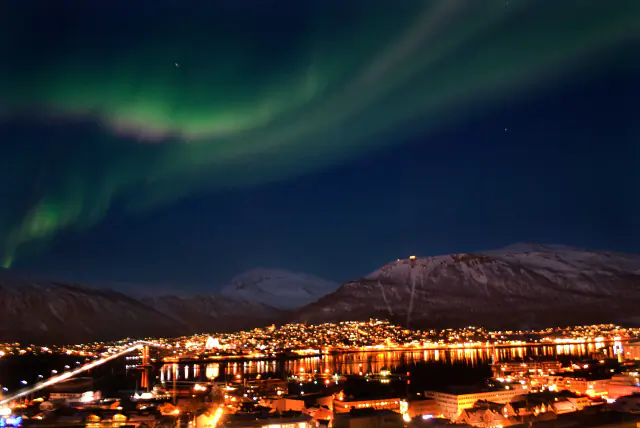
Kolari Bridge: The bridge crossing the river to Sweden offers elevated views in both directions along the frozen river course. On clear nights, this is one of the most atmospheric aurora locations in western Lapland - the border river under northern lights with two countries visible simultaneously.
Äkäsjoki Valley Road: The road northeast from Kolari toward Ylläs follows the Äkäsjoki river valley through forest. Several open areas along this route provide good sky access and dark conditions as you gain distance from the village. The increasingly dramatic backdrop of the Ylläs fell growing in the distance adds visual interest.
Frozen Lake Kurtakko: About 15 km south of Kolari, this larger lake provides open sky views over flat ice with no horizon obstructions. The walk from the road to the lake shore is short, and the absence of nearby settlements ensures very dark conditions.
Aurora Season in Kolari
Kolari's aurora season runs from September through March:
September-October: Autumn arrives early in Lapland. The river is still open water in September, providing excellent reflective foregrounds. By October, first ice forms on the river edges and temperatures drop to -5°C to -15°C. The ruska (autumn colors) on the surrounding hillsides create warm tones for early-season aurora.
November-January: The river freezes solid, typically by mid-November, transforming into an ice corridor. The kaamos (polar twilight) period dims the days to a few hours of blue light. Aurora viewing conditions are at their best, with crisp cold air delivering clear nights. The train connection from Helsinki makes Kolari accessible even in deep winter.
February-March: Lengthening days bring more activity and the ski season at Ylläs reaches peak conditions. Nights remain dark enough for excellent aurora viewing. The spring equinox in March can enhance aurora activity. See our tonight's forecast for planning.
Getting to Kolari
Getting There: Kittilä Airport (KTT) is approximately 70 km from Kolari village, about 1 hour by car. More uniquely for Finland, Kolari has a direct overnight train connection from Helsinki (VR's Lapland train) - one of the most atmospheric ways to arrive in Lapland, waking up in Arctic winter landscape. Transfer buses and taxis connect Kolari train station to the Ylläs resort area.
Train to Lapland: The overnight train from Helsinki to Kolari takes about 12-13 hours and includes sleeping accommodations. Departures are typically in the evening, arriving in Kolari the following morning. The train also stops at Rovaniemi and Kemijärvi. This is one of Finland's most romantic winter travel experiences.
Accommodation: Kolari village has a small hotel and guesthouses. For more extensive options, continue to the Ylläs resort villages (Akaslompolo or Ylläsjärvi, 20 km northeast). Budget travelers often use Kolari as a base and shuttle to Ylläs for skiing.
Swedish Border Experience: From Kolari, it's easy to cross the border bridge to the Swedish side of the river (Swedish village of Kolari or Pajala). The EU open border means you can walk freely between countries. Swedish Pajala's proximity to Finnish Lapland creates opportunities for cross-border aurora exploration.
Plan the trip
Getting to Kolari
Aurora trips need three things booked together: a flight into the right airport, somewhere dark to stay, and usually a car, because the sky you get is the sky above wherever you can drive to that night.
Compare flightsLive fares into Kittila Airport (KTT), the closest airport to Kolari.
Affiliate links. Booking through them costs you nothing extra and helps keep this site running.
Borealis App
Aurora forecasts, social feed & Hunter Ranks
Frequently Asked Questions
Yes, Kolari serves as the transport hub with a train station, while Ylläs resort villages (Akaslompolo and Ylläsjärvi) are 20 km northeast. Many visitors arrive at Kolari by overnight train from Helsinki, then transfer to Ylläs. Budget travelers sometimes stay in Kolari to save costs compared to the resort villages.
Yes, VR's overnight train from Helsinki stops at Kolari (and Rovaniemi), making it one of the most romantic ways to reach Lapland. The train journey takes about 12-13 hours, departing Helsinki in the evening and arriving in Kolari in the morning. It's an authentic Finnish experience that aurora seekers treasure.
The Muonionjoki freezes solid from approximately mid-November to late April. In winter, it becomes an ice road and walking/snowmobile highway. The frozen river corridor is excellent for aurora viewing as it provides open sky above the flat ice. The border river divides Finland on one bank from Sweden on the other.
Kolari is directly on the Finnish-Swedish border - the Muonionjoki River running through the municipality forms the border. The bridge crossing to Sweden is within the town. Swedish border communities including Pajala are visible across the river.
Related Articles
Destination
Northern Lights in Yllas
Ylläs is Finland's highest fell at 718 meters, rising from the heart of Pallas-Yllästunturi National Park. This major sk...
Destination
Northern Lights in Muonio
Muonio is a small Lapland village on the Muonionjoki river at the Finnish-Swedish border. Known for husky sledding and w...
Destination
Northern Lights in Levi
Levi is Finland's largest and most popular ski resort, located in the heart of Finnish Lapland. It combines world-class ...