Northern Lights Destination
Northern Lights in Rost, Norway
Rost is where the Lofoten Islands end and the open Atlantic begins - this outermost island community offers aurora above endless ocean in one of Norway's most remote inhabited settings.
Rost: Lofoten's Outermost Aurora Island
Rost lies at the southwestern tip of the Lofoten archipelago, where the island chain dissolves into a scattering of skerries and reefs before the open Atlantic takes over. At 67.5°N, this low-lying island of about 550 residents is the outermost inhabited island in the Lofoten system, connected to the mainland only by ferry (from Bodø or Moskenes) or by Rost's small airstrip.
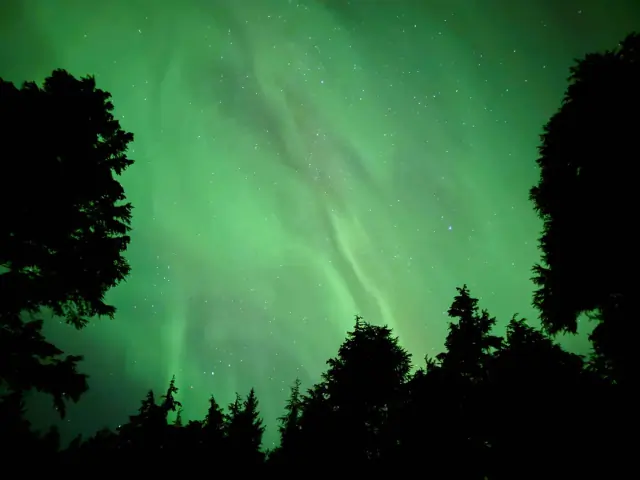
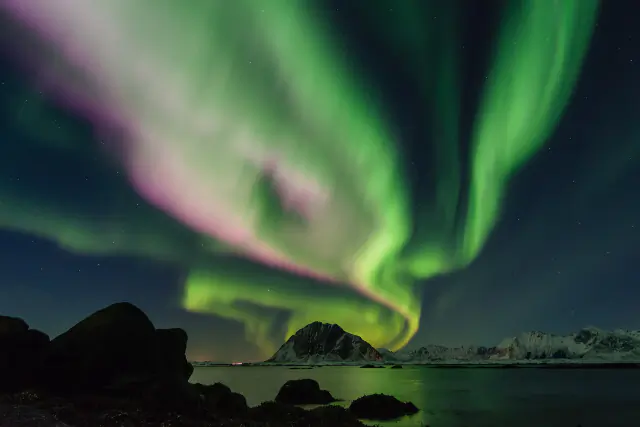
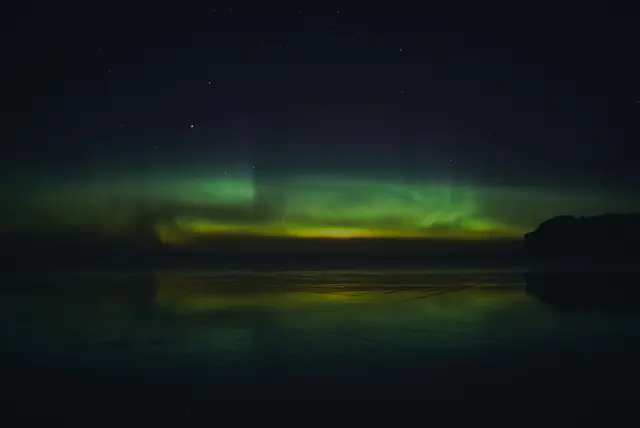
What makes Rost extraordinary for aurora is the absolute primacy of the sea. Unlike the dramatic peaks of inner Lofoten, Rost is flat - the highest point barely reaches 30 meters above sea level. The island is surrounded by the Atlantic on all sides, and the horizon, unbroken by mountains, extends 360 degrees around you. When aurora appears, it rises from the ocean itself and arcs overhead in a complete dome of light.
Rost is also home to one of the world's largest seabird colonies - an estimated 2 million birds nest here in summer, including puffins, gannets, and storm petrels. In winter the birds are gone, leaving the island to its small community, the fishing fleet, and the aurora. With KP 2 sufficient for activity, check the aurora forecast for this special outpost.
Aurora Viewing on Rost
Rost Lighthouse: The lighthouse on the western side of the island provides the classic Rost aurora composition - a working lighthouse surrounded by open sea with aurora blazing overhead. The lighthouse has been guiding vessels past the dangerous Lofoten reefs for over a century and creates a uniquely atmospheric foreground.
Western Sea Cliffs: The bird cliffs on Rost's western side (empty of birds in winter) provide elevated positions above the open Atlantic. These cliffs face directly west and northwest, giving first view of aurora as it develops on the northern horizon.
Rost Village Harbor: The main harbor faces east toward inner Lofoten, with the mountain wall of the main Lofoten chain visible on clear days as a distant silhouette. The fishing boats and docks provide a human-scale foreground for aurora that contrasts beautifully with the vast sky.
Outer Skerries: For the adventurous visitor with access to a local boat, the outer skerries beyond Rost provide dark-sky aurora viewing completely surrounded by sea - an experience available in very few places on Earth.
When to Visit Rost
Rost's aurora season runs from September through March. The island's maritime climate means weather is variable, but the rewards on clear nights are exceptional:
September-October: Aurora season begins as the midnight sun ends and polar night approaches. The Atlantic can be stormy in autumn, but clear nights deliver aurora over open sea in a setting completely free from tourists. The last seabird stragglers depart, leaving the island to its winter character.
November-January: Deep winter with polar-influenced darkness dominating. Storm systems from the Atlantic are possible, but high-pressure weather systems bring extraordinary clear conditions. The small fishing community maintains its routines - you can experience the authentic rhythm of island life in winter while waiting for aurora.
February-March: Improving weather as winter transitions toward spring. The Lofotfisket (Lofoten cod fishing season) is at its peak, bringing additional activity to the harbor and processing facilities. Aurora continues into March. The equinox effect can bring enhanced activity. This is often the best month for combined weather and aurora probability at Rost.
Getting to Rost
Getting There: Rost is served by Widerøe flights from Bodo and Leknes (multiple weekly, check schedule). The ferry from Bodo to Rost takes approximately 4-5 hours depending on the route (some services also stop at Varoy and Moskenes). Summer ferry service is more frequent than winter - check current schedules at Torghatten Nord.
Ferry to Bodo: The ferry connection from Rost to Bodo is operated seasonally, with reduced winter service. Plan your connections carefully as weather can delay or cancel ferry services. Having flexible departure dates is important for Rost visits.
Accommodation: Accommodation on Rost is extremely limited. Rost camping and a small number of guesthouses and rented cabins are the primary options. Contact Rost municipality in advance for current availability. Self-catering is essential as restaurant options are minimal.
The Lofoten Winter Fishing Culture: Visiting Rost in January-March means experiencing the heart of the traditional Lofoten cod fishing season at one of its most authentic outposts. The small community is fully engaged in fishing, processing, and air-drying stockfish (tørrfisk). This cultural immersion, combined with aurora viewing, makes Rost an extraordinarily authentic destination.
Weather Contingency: Plan for the possibility of being weather-bound on Rost for a day or more if Atlantic storms prevent ferry or flight departure. This is not a destination for tight itineraries. The enforced pause can become part of the experience.
Plan the trip
Getting to Rost
Aurora trips need three things booked together: a flight into the right airport, somewhere dark to stay, and usually a car, because the sky you get is the sky above wherever you can drive to that night.
Compare flightsLive fares into Leknes Airport (LKN), the closest airport to Rost.
Affiliate links. Booking through them costs you nothing extra and helps keep this site running.
Borealis App
Aurora forecasts, social feed & Hunter Ranks
Frequently Asked Questions
Fly from Bodo or Leknes on Widerøe regional services (check winter schedules as they are reduced from summer), or take the Bodo-Rost ferry (approximately 4-5 hours). Winter ferry service is limited - check current schedules at Torghatten Nord and book well ahead. Weather can affect both ferry and flight services.
Rost's defining characteristic is its flatness and total ocean surroundings. Unlike mountainous inner Lofoten, Rost's low profile means aurora rises from the sea horizon in every direction, creating a 360-degree dome experience. The lighthouse and fishing harbor create uniquely maritime aurora foregrounds. Complete absence of light pollution is another major advantage.
Rost hosts approximately 2 million breeding seabirds in summer, one of the world's largest colonies. By winter, the birds (puffins, gannets, storm petrels, razorbills) have mostly departed to the open Atlantic. This leaves the island in quiet winter mode, with resident sea eagles and occasional winter seabirds remaining. The bird cliffs are empty but dramatic as aurora foregrounds.
Rost's Atlantic exposure means highly variable weather with strong winds, rain, and occasional storms possible at any time. However, clear cold periods also occur, particularly with high-pressure systems from the north. Always plan flexible itineraries and be prepared for weather delays to ferry and flight services.
Related Articles
Destination
Northern Lights in Lofoten
The Lofoten Islands offer one of the most photogenic northern lights experiences on Earth. Dramatic peaks rising from th...
Destination
Northern Lights in Reine
Reine is widely considered the most beautiful village in Norway, with red rorbuer cabins perched beneath dramatic peaks ...
Destination
Northern Lights in Henningsvaer
Henningsvaer is a picturesque fishing village spread across several small islands at the foot of dramatic mountain walls...