Northern Lights Destination
Northern Lights in Galloway, Scotland
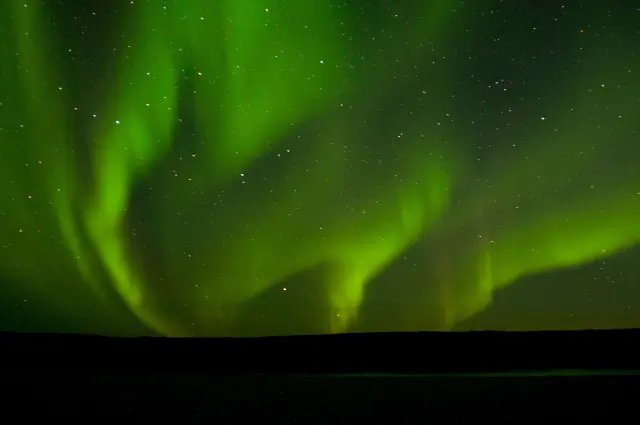
Galloway Forest Dark Sky Park — the UK's first — offers the darkest skies in Britain. When strong geomagnetic storms push the aurora south, Galloway delivers vivid, detailed displays.
Aurora in the UK's First Dark Sky Park
Galloway Forest Park was designated the UK's first Dark Sky Park in 2009, recognizing its exceptionally dark skies in an increasingly light-polluted Britain. The park's remote location in southwest Scotland, far from major cities, provides darkness levels rarely found elsewhere in the UK.
At 55.07°N, Galloway is further south than other Scottish aurora destinations and requires a KP index of 6 or higher for visible displays. This means aurora viewing here is less frequent than northern Scotland — but when the lights do appear, Galloway's extraordinary sky darkness means the display appears with vivid detail and color that brighter locations cannot match.
The dark sky designation brings a special quality to aurora events. The Bortle class 1-2 conditions in the forest's interior are among the darkest measured in Europe. Fine aurora structures, subtle color gradients, and faint arcs that are invisible under light pollution become clearly visible here.
Best Viewing Spots in Galloway
The Scottish Dark Sky Observatory at Dalmellington offers telescope viewing and a knowledgeable team who can advise on conditions. While primarily focused on astronomy, the observatory is perfectly positioned for aurora viewing when conditions allow.
Clatteringshaws Loch in the heart of Galloway Forest provides a classic dark-sky viewing location with the loch reflecting any aurora light. Bruce's Stone above the loch commemorates Robert the Bruce and provides an elevated viewpoint. Glentrool offers forested lakeside settings within the darkest part of the park.
The Raiders Road forest drive and Murray's Monument provide accessible locations within the forest. Along the coast, the Mull of Galloway (Scotland's most southerly point) offers dramatic cliff-top viewing across the Irish Sea.
Getting to Galloway and Practical Tips
Galloway is approximately 2 hours south of Glasgow by car. Glasgow and Prestwick airports provide the closest air links. The area has no rail connections, so a car is essential. Newton Stewart, Castle Douglas, and Dumfries are the nearest towns with accommodation.
Accommodation includes B&Bs, country hotels, self-catering cottages, and camping/glamping options. The area is peaceful and uncrowded, even in summer. Winter visitors will find plenty of availability and quiet conditions.
Galloway winters are mild (3°C to 8°C) but wet, influenced by the Atlantic and Irish Sea. Waterproof clothing is essential. The key to aurora success here is patience and monitoring — strong KP 6+ events are less common but the dark-sky conditions make every occurrence spectacular.
Plan the trip
Getting to Galloway
Aurora trips need three things booked together: a flight into the right airport, somewhere dark to stay, and usually a car, because the sky you get is the sky above wherever you can drive to that night.
Compare flightsLive fares into Glasgow Airport (GLA), the closest airport to Galloway.
Affiliate links. Booking through them costs you nothing extra and helps keep this site running.
Borealis App
Aurora forecasts, social feed & Hunter Ranks
Frequently Asked Questions
Less frequently than northern Scotland — Galloway at 55°N requires KP 6+ for visible aurora, which occurs roughly 5-15 times per year during active solar periods. During solar maximum, frequency increases. When aurora does appear here, the dark-sky conditions make it exceptionally vivid.
Yes, Galloway's Dark Sky Park status makes it outstanding for stargazing year-round. The Milky Way is spectacular, and deep-sky objects are visible to the naked eye. Aurora is a bonus when geomagnetic conditions allow — but the dark skies are the consistent attraction.
Galloway's advantage is sky darkness — it has the darkest measured skies in Britain. While aurora is less frequent at this latitude, when it appears, the level of detail and color visible here exceeds what you'd see from brighter locations further north. It's quality over quantity.
Yes, the observatory operates year-round with seasonal hours. Winter evenings are the best time for both astronomical observing and aurora watching. Check their website for opening times and special events, and book sessions in advance.
Related Articles
Destination
Northern Lights in Cairngorms
The Cairngorms National Park in the Scottish Highlands is Britain's largest national park and one of the best places in ...
Destination
Northern Lights in Isle of Skye
The Isle of Skye, Scotland's most dramatic island, combines rugged mountain scenery, medieval castles, and dark skies fo...
Destination
Northern Lights in Aberdeenshire
Aberdeenshire in northeast Scotland offers excellent aurora viewing thanks to its northerly latitude, east-facing coastl...