Northern Lights Destination
Northern Lights in Outer Hebrides, Scotland
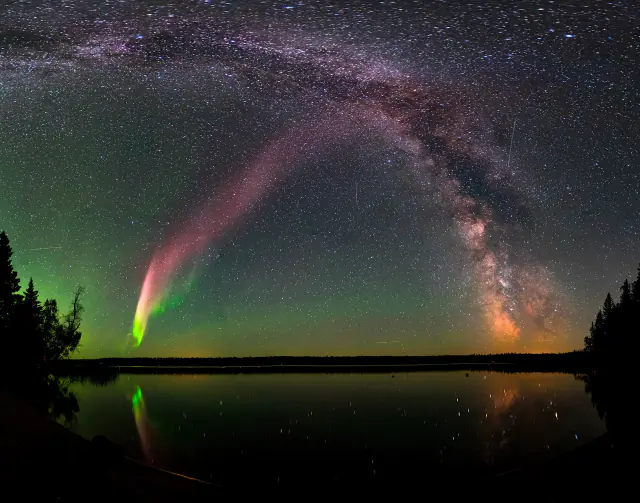
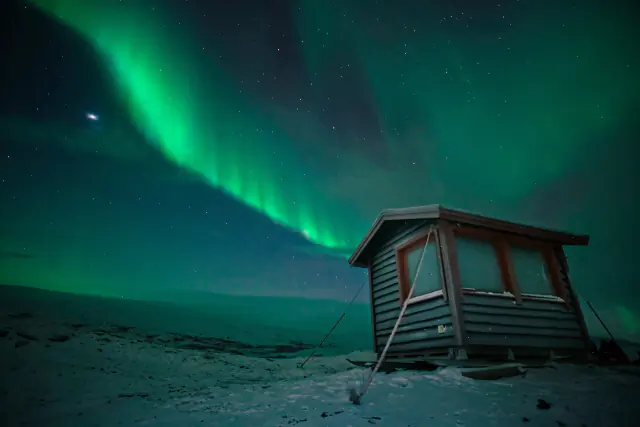
The Outer Hebrides stand at the very edge of Europe — where ancient Gaelic culture, white Atlantic beaches, and some of the continent's darkest skies combine for an extraordinary island aurora experience.
Aurora at the Edge of the Atlantic
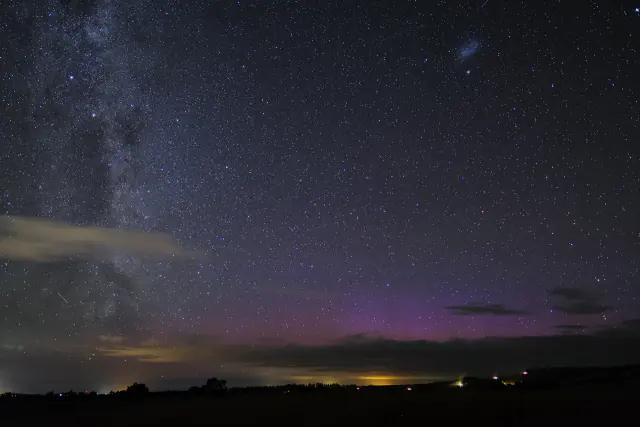
The Outer Hebrides — Scotland's outer island chain — extend for over 200 km along the Atlantic coast at latitudes from 57°N (Barra) to 58.5°N (the Butt of Lewis), placing them firmly within aurora viewing range during moderate geomagnetic events. A KP index of 4 is generally sufficient for visible northern lights from these islands, and the extreme isolation of the Western Isles means that on clear nights, the aurora appears against a backdrop of almost unimaginable darkness.
The key to the Outer Hebrides' aurora excellence is a fundamental geographic fact: there is no significant landmass for over 1,000 km to the west. The nearest inhabited land in that direction is the coast of Labrador, Canada. This means there is no light pollution from the west — one of the four cardinal directions is entirely and permanently light-pollution-free. On the island chain's western coasts, you look out across the open Atlantic into absolute darkness, with only the aurora above and the breaking waves below.
The islands have a deep Gaelic cultural tradition entirely distinct from mainland Scotland. The Gaelic language remains widely spoken, particularly on Lewis and Harris, and the islands' ancient stone circles (most famously the Callanish Standing Stones on Lewis) provide a connection to human aurora observation stretching back over 4,000 years. Consult the aurora forecast before planning your island viewing nights.
Best Aurora Viewing Spots in the Outer Hebrides
The Callanish Standing Stones on Lewis are perhaps the most mythically charged aurora viewing location in Scotland. These Neolithic monoliths, erected around 2900 BC in a unique cruciform arrangement, have witnessed the northern lights for millennia. On active aurora nights, photographing the stones under northern lights produces images of profound atmosphere and historical resonance.
The Butt of Lewis lighthouse at the northernmost tip of Lewis — one of Scotland's most remote and dramatic headlands — provides north-facing ocean views with no land interference whatsoever. The lighthouse beam sweeping through aurora-lit sky creates extraordinary photographic opportunities. The nearby Ness area offers some of the darkest views in the islands.
On Harris, the Luskentyre Beach — considered one of the most beautiful beaches in Scotland — faces west along pristine white sands and aquamarine water. While the aurora typically appears to the north, strong events fill the entire sky, and the combination of otherworldly beach scenery with northern lights is a photographer's dream. Hushinish and the remote North Harris hills provide elevated viewing with open Atlantic horizons. For South Uist, the west coast machair — flower-rich Atlantic grassland — provides a uniquely fragile and beautiful foreground. Prepare for island photography conditions with our aurora photography guide.
Best Time for Aurora in the Outer Hebrides
The aurora season in the Outer Hebrides runs from October through March, when nights are long enough for aurora viewing. October is a favored month — the Atlantic can produce stunning sunsets before darkness brings aurora potential, and temperatures remain mild enough for extended outdoor viewing (5°C to 12°C).
The greatest challenge to aurora viewing in the Outer Hebrides is the Atlantic weather. The islands receive some of the UK's highest rainfall and most persistent cloud cover due to their position on the edge of the Atlantic storm track. Clear spells tend to be brief, arriving between weather systems or during settled high-pressure periods. Monitoring weather forecasts is as important as tracking the KP index.
When clear nights do arrive — particularly during settled winter high pressure from the north — the viewing is exceptional. The cold, dry Arctic air that accompanies these spells produces extraordinary atmospheric clarity and can persist for several consecutive nights. Booking a flexible stay of at least a week allows you to catch these rare clear windows while enjoying island exploration during cloudy periods. Our best time to visit guide has more advice on planning around weather variability.
Getting to the Outer Hebrides
Stornoway Airport (SYY) on Lewis and Benbecula Airport (BEB) on the Uists are the two main island airports, served by flights from Edinburgh, Glasgow, and Inverness. CalMac Ferries connect mainland ports to the islands — Ullapool to Stornoway (2.5 hours), Uig (Skye) to Tarbert (Harris) and Lochmaddy (North Uist), and Oban to Lochboisdale (South Uist) and Castlebay (Barra). A hire car is essential on the islands.
Accommodation on the islands ranges from comfortable hotels in Stornoway and Tarbert to self-catering cottages, B&Bs, and hostels throughout the island chain. Booking well in advance is essential, especially for weekends and peak season. The Lews Castle Hotel in Stornoway and various Hebridean hospitality providers offer comfortable bases.
The islands' Gaelic culture and Calvinist Sunday observance (on Lewis especially) are important aspects of local life. Many shops and services are closed on Sundays on Lewis. Embrace the island pace — the Outer Hebrides reward slow travel and patience. Bring excellent waterproofs, warm layers, and expect the Atlantic weather to be part of the experience. Mobile signal is available in most settlements but absent in remote areas.
Plan the trip
Getting to Outer Hebrides
Aurora trips need three things booked together: a flight into the right airport, somewhere dark to stay, and usually a car, because the sky you get is the sky above wherever you can drive to that night.
Compare flightsLive fares into Stornoway Airport (SYY), the closest airport to Outer Hebrides.
Affiliate links. Booking through them costs you nothing extra and helps keep this site running.
Borealis App
Aurora forecasts, social feed & Hunter Ranks
Frequently Asked Questions
The Western Isles are surrounded by the Atlantic Ocean, with no significant land — and therefore no light pollution — for over 1,000 km to the west. Combined with a sparse island population and no large cities nearby, the result is some of the darkest skies in Western Europe.
Yes — Lewis and Harris are the northernmost and most accessible of the Western Isles for aurora viewing. At 58°N (Butt of Lewis), a KP index of 4 produces visible aurora. The Callanish Standing Stones on Lewis provide one of Scotland's most atmospheric aurora viewing locations.
By air from Edinburgh, Glasgow, or Inverness to Stornoway (Lewis) or Benbecula (Uists). By CalMac ferry from Ullapool to Stornoway (2.5 hours), from Uig on Skye to Harris or North Uist, or from Oban to South Uist or Barra. Ferry travel is scenic but can be rough in Atlantic swells.
The Callanish Standing Stones (Calanais in Gaelic) are a Neolithic stone circle and avenue on the Isle of Lewis, dating to around 2900-2600 BC. They predate Stonehenge and are one of the most significant prehistoric monuments in Scotland. The stones are freely accessible and provide an extraordinary aurora photography backdrop.
The Outer Hebrides have a mild but wet and windy Atlantic climate. Winter temperatures typically range from 3°C to 10°C — cold but rarely extreme. Wind is the dominant characteristic, with Atlantic gales frequent. Clear spells arrive between weather systems and can be spectacular. Flexible plans and good waterproofs are essential.
Related Articles
Destination
Northern Lights in Shetland
The Shetland Islands at 60°N are the most northerly part of the United Kingdom and the best location in Britain for seei...
Destination
Northern Lights in Orkney
The Orkney Islands, lying just off Scotland's northeast tip, are among the best places in the UK to see the northern lig...
Destination
Northern Lights in Isle of Skye
The Isle of Skye, Scotland's most dramatic island, combines rugged mountain scenery, medieval castles, and dark skies fo...