Northern Lights Destination
Northern Lights in Cabo Vírgenes, Argentina
At the entrance to the Strait of Magellan, Cabo Vírgenes points south toward Antarctica — where one of Patagonia's largest penguin colonies meets the aurora australis above the world's most storied waterway.
Aurora Australis at the Strait of Magellan
Cabo Vírgenes at 52.4°S occupies one of the most historically significant and geographically dramatic positions in the Western Hemisphere. This windswept cape marks the Atlantic entrance to the Strait of Magellan — the legendary sea passage that connected the Atlantic and Pacific Oceans for centuries before the Panama Canal. Ferdinand Magellan entered these waters in 1520, naming the cape after his voyage's feast day.
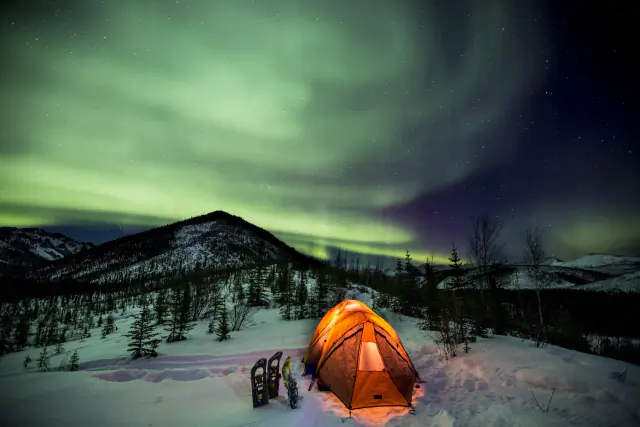
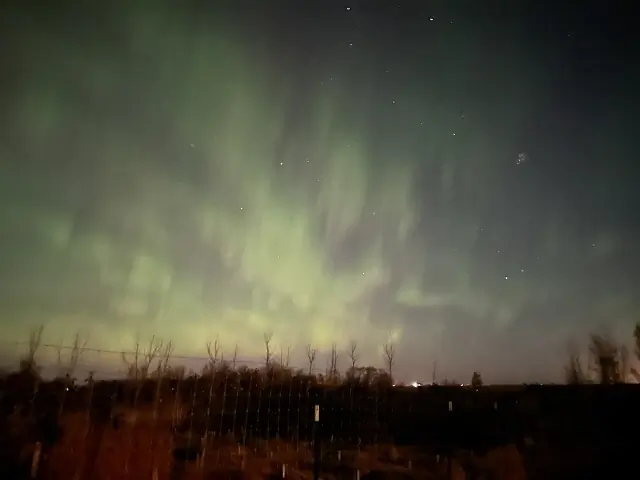
For aurora australis viewing, the cape's extreme southern latitude and coastal exposure provide excellent conditions. A KP index of 4 produces visible aurora australis at this latitude, and the Patagonian steppe's minimal light pollution ensures that displays appear vivid and undiminished. The cape's position at sea level facing south toward the Strait means the southern horizon is entirely open — the aurora rises directly above the dark water of the world's most famous shipping lane.
The cape is also home to one of Argentina's largest Magellanic penguin colonies, with tens of thousands of birds nesting in the surrounding territory. The juxtaposition of penguins and aurora australis — both present in winter although penguins are typically at sea or in burrows at night — adds an extraordinary wildlife dimension to the location. Monitor the aurora australis forecast for Patagonian conditions before setting out.
Aurora Viewing Spots at Cabo Vírgenes
The Cabo Vírgenes lighthouse, an active navigational light at the cape's tip, serves as the focal point for the natural reserve. The lighthouse sits at the edge of the Strait of Magellan, and its surroundings provide direct south-facing views with no terrain obstruction. On clear nights, the aurora australis appears to rise directly from the Strait's dark water, with the lighthouse beam sweeping through aurora-lit sky.
The coastal steppe surrounding the lighthouse provides unobstructed viewing in all directions — the flat Patagonian terrain has no features to block the horizon. Walking short distances from the lighthouse car park places you in conditions with virtually zero light pollution. The penguin nesting territory around the reserve, marked with low fencing, creates a foreground of burrow openings and wind-shaped scrub beneath the southern lights.
The road from Río Gallegos (approximately 120 km) passes through open Patagonian steppe — itself providing multiple dark viewing positions with expansive sky. The small estancias (ranches) along this road occasionally offer basic hospitality and their dark surroundings can provide excellent informal viewing stops. Consult our aurora photography guide for capturing aurora australis over open Patagonian coastline.
When to Visit Cabo Vírgenes for Aurora Australis
The aurora australis season at Cabo Vírgenes runs from March through September — the Southern Hemisphere's dark season. March and September mark the equinoxes, which are statistically the most geomagnetically active periods and represent excellent aurora viewing windows. The Patagonian spring in September also brings the Magellanic penguins ashore to their breeding colonies, creating the remarkable possibility of seeing penguins and aurora in the same evening.
June and July offer the longest nights at this latitude — up to 16 hours of darkness — providing extended viewing windows. However, the Patagonian winter also brings its most intense storms in these months. Wind is the defining characteristic of Cabo Vírgenes at any season — the cape is exposed to the full force of Patagonian westerlies, and gusts can reach extreme levels. Plan for windproof clothing and be prepared to shelter behind vehicles or structures during the strongest gusts.
April and May represent a sweet spot — aurora season is underway, the penguin colony is present in reduced numbers (most birds remain into April), nights are long but not at their extreme, and weather is somewhat less brutal than deep winter. The austral autumn light on the Patagonian steppe in these months is beautiful, adding a warm amber quality to the landscape before darkness and aurora arrive. See our best time to see page for Southern Hemisphere aurora planning.
Getting to Cabo Vírgenes and Practical Information
Cabo Vírgenes is accessed from Río Gallegos, the capital of Santa Cruz Province, approximately 120 km to the north along unpaved Patagonian roads. Río Gallegos Airport (RGL) receives daily flights from Buenos Aires (approximately 3 hours) via Aerolíneas Argentinas. Car hire in Río Gallegos is essential — the road to the cape is unpaved and requires a suitable vehicle, particularly in wet conditions when it can become muddy and challenging.
There is no accommodation at the cape itself. Río Gallegos provides the nearest lodging — a city with hotels, restaurants, and services. Several tour operators in Río Gallegos offer day trips to Cabo Vírgenes during the penguin season (September-April), and some can arrange aurora-focused evening excursions during appropriate seasons.
The Cabo Vírgenes Natural Reserve charges a small entry fee. The reserve is managed for penguin conservation and visitors must remain on marked paths in the penguin colony area. The site is open during daylight hours and access for evening aurora viewing may require arrangement with the reserve authorities or a local tour operator. Patagonian wind is omnipresent — bring a windproof jacket regardless of temperature, and weight your tripod heavily or use sandbags for photography stability.
Plan the trip
Getting to Cabo Vírgenes
Aurora trips need three things booked together: a flight into the right airport, somewhere dark to stay, and usually a car, because the sky you get is the sky above wherever you can drive to that night.
Compare flightsLive fares into Río Gallegos Airport (RGL), the closest airport to Cabo Vírgenes.
Affiliate links. Booking through them costs you nothing extra and helps keep this site running.
Borealis App
Aurora forecasts, social feed & Hunter Ranks
Frequently Asked Questions
The Magellanic penguin colony is most active from September through March, while aurora australis season runs March through September. The overlap is most significant in March and September — the equinox months. In September, the penguins arrive for breeding while aurora season begins, creating a genuine overlap opportunity.
Fly to Río Gallegos (RGL) from Buenos Aires (approximately 3 hours). Hire a car in Río Gallegos and drive the 120 km to the cape — the road is mostly unpaved and requires appropriate vehicle clearance. Tour operators in Río Gallegos also offer day trips during penguin season. There is no public transport.
The Strait of Magellan is a 570 km natural sea passage through the southern tip of South America, separating mainland Patagonia from Tierra del Fuego. Named after Ferdinand Magellan who first navigated it in 1520, it was the primary route for global circumnavigation until the Panama Canal opened in 1914. Cabo Vírgenes marks its Atlantic entrance.
Yes — Patagonian wind is legendary and Cabo Vírgenes is particularly exposed. Gusts regularly exceed 80-100 km/h, and sustained winds of 40-60 km/h are routine. This makes extended outdoor photography challenging. Use the windward side of the lighthouse or vehicle for shelter, use heavy tripods, and expect equipment to require securing at all times.
El Calafate (Perito Moreno Glacier, 5 hours west) and Ushuaia (southernmost city, accessible via Río Gallegos and across the Strait) are the obvious combinations for a comprehensive southern Patagonia aurora circuit. The Strait of Magellan crossing itself, by ferry from Punta Delgada to Bahía Azul, provides a crossing of the famous waterway.
Related Articles
Destination
Northern Lights in Tierra del Fuego
Tierra del Fuego, the 'Land of Fire' at the southern tip of South America, offers aurora australis viewing from one of t...
Destination
Northern Lights in El Calafate
El Calafate, gateway to Los Glaciares National Park and the famous Perito Moreno Glacier, offers aurora australis viewin...
Destination
Northern Lights in Ushuaia
Ushuaia, the southernmost city in the world, sits at the tip of South America on the Beagle Channel. Known as 'El Fin de...