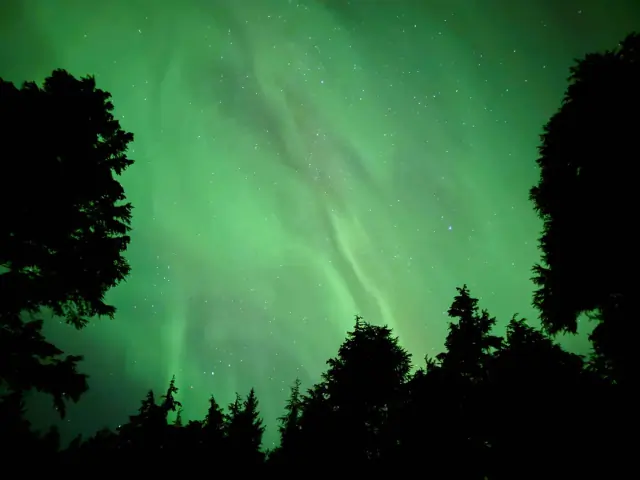
Southern Lights
Northern Lights in Argentina
At the end of the world, where the Andes plunge into the Beagle Channel and Tierra del Fuego's forests meet the sub-Antarctic wind, the aurora australis occasionally graces the sky with an otherworldly glow. Ushuaia, the planet's southernmost city, offers the rarest of aurora experiences — southern lights viewed from the very edge of civilization.
Aurora Australis at the End of the World
Ushuaia, at 54.8°S on the island of Tierra del Fuego, is the world's southernmost city and South America's closest major settlement to the southern auroral oval. While Argentina's latitude does not place it directly beneath the auroral zone (which centers around 65-70°S magnetic latitude over Antarctica), strong geomagnetic storms expand the oval northward, bringing aurora australis within sight of Tierra del Fuego.
Argentina occupies a unique geographic position. The southern tip of South America is the closest continental landmass to Antarctica from the Americas, separated only by the Drake Passage. This proximity means that when the auroral oval expands during major geomagnetic events, Ushuaia and Tierra del Fuego are the first American landfall for the southern lights.
The dramatic landscape of Tierra del Fuego adds enormously to the experience. The snow-capped Andes, the Beagle Channel's still waters, the ancient lenga forests, and the rugged coastline provide foregrounds that rival any aurora destination. The atmospheric conditions at this latitude — clear, cold sub-Antarctic air with minimal light pollution outside Ushuaia — create excellent visibility when aurora does appear.
Seeing the aurora australis from Argentina is a bucket-list achievement. The displays are infrequent, requiring strong geomagnetic storms, but when they occur they generate enormous excitement throughout Patagonia and across South American media. The rarity and the dramatic setting make each sighting profoundly memorable.
When to See Southern Lights in Argentina
The aurora season in Tierra del Fuego corresponds to the Southern Hemisphere winter: April through September. These months provide the longest and darkest nights, maximizing the window for catching aurora activity.
May through August offer the darkest conditions. Ushuaia in winter has only 7-8 hours of daylight around the solstice, providing long stretches of dark sky from approximately 6 PM to 9 AM. Winter temperatures hover between -2°C and 4°C at sea level — cold but far milder than northern aurora destinations at comparable latitudes.
April and September bring equinox enhancements to geomagnetic activity, potentially increasing aurora chances. The shoulder months have more moderate temperatures and slightly more daylight but remain dark enough for aurora viewing from evening through dawn.
The dominant factor is not the month but the geomagnetic activity level. Ushuaia requires a KP index of approximately 6-7 or higher for visible aurora, making it more demanding than New Zealand or Tasmania. Major displays require KP 7-9. These events occur irregularly — perhaps 5-10 times per year during solar maximum — making successful viewing a genuine achievement.
Monitor the aurora forecast and southern hemisphere aurora communities for real-time updates. The Argentine space weather service and social media groups dedicated to aurora australis in Patagonia provide local alerts.
Best Places for Aurora Australis in Argentina
Ushuaia — The primary base for Argentine aurora viewing. The city itself (population 57,000) has some light pollution, but excellent dark-sky locations are accessible within 15-30 minutes by car. Key viewpoints include: Lago Escondido (a pristine mountain lake surrounded by lenga forest), Paso Garibaldi (a mountain pass with sweeping southern views), and the shores of the Beagle Channel east of the city. Ushuaia's well-developed tourism infrastructure (hotels, restaurants, tour operators) makes it a comfortable base.
Tierra del Fuego National Park — Located just west of Ushuaia, the park provides dark skies and dramatic coastal scenery along the Beagle Channel. Lapataia Bay, the terminus of Ruta Nacional 3 (the southernmost point of the Pan-American Highway network), offers a fitting location for aurora viewing at the literal end of the road. The park's forests, mountains, and waterways create atmospheric settings.
El Calafate — Gateway to Los Glaciares National Park and the famous Perito Moreno Glacier, El Calafate at 50.3°S is further from the auroral oval than Ushuaia but has been the site of documented aurora sightings during major storms (KP 8-9). The combination of glacier scenery, Lago Argentino, and Patagonian steppe creates unique viewing conditions when the southern lights do reach this latitude.
Tips for Aurora Australis Viewing in Argentina
Set realistic expectations. Aurora australis from Ushuaia is a rare event, not a nightly occurrence. Do not travel to Tierra del Fuego solely for the aurora — instead, plan a Patagonian adventure that includes Ushuaia's glaciers, the Beagle Channel, Tierra del Fuego National Park, hiking, wildlife, and perhaps an Antarctic cruise, with aurora viewing as an exciting possibility.
Monitor forecasts obsessively. Join aurora australis alert communities, follow space weather services, and check the aurora forecast daily during your visit. When a strong coronal mass ejection is detected heading toward Earth, you typically have 1-3 days notice before its arrival — enough time to plan a viewing night.
Face south from a dark location. Get away from Ushuaia's city lights and find a spot with an unobstructed southern horizon. The Beagle Channel coast east and west of the city, mountain passes, and lakeshores all provide excellent vantage points. The aurora australis will appear on the southern horizon, potentially extending upward during strong events.
Bring warm, windproof clothing. Tierra del Fuego's weather is dominated by wind. Even when temperatures are moderate (0-5°C), the constant Patagonian wind creates significant chill. Windproof layers are more important than extreme cold-weather gear. A good windproof shell, warm hat, and insulated gloves are essential.
Learn some Spanish. While Ushuaia's tourism industry caters to international visitors, local aurora communities and alerts are primarily in Spanish. Basic Spanish skills or translation apps will help you access local information, weather forecasts, and community sighting reports.
Consider combining with Antarctica. Ushuaia is the primary departure point for Antarctic cruises. Some voyages venture south of 65°S during shoulder months (November, March), where the aurora australis is more frequently visible. An Antarctic cruise from Ushuaia adds a frontier dimension to your southern lights quest.
Borealis App
Aurora forecasts, social feed & Hunter Ranks
Frequently Asked Questions
Yes, the aurora australis has been photographed and observed from Ushuaia multiple times, particularly during strong geomagnetic storms (KP 7-9). Displays range from a green or red glow on the southern horizon to more vivid multi-colored curtains during major events. Sightings are infrequent — perhaps 5-10 detectable events per year during solar maximum — but they do occur and can be spectacular.
Ushuaia (54.8°S) typically requires a KP index of 6-7 for a detectable glow on the southern horizon, and KP 7-9 for vivid naked-eye displays. El Calafate (50.3°S) needs KP 8-9 for any chance of seeing aurora. These are demanding thresholds, making Argentine aurora a rare event. Monitor the KP index and be ready to observe when major geomagnetic storms occur.
May through August offer the darkest nights, but aurora can occur in any month from April through September. The critical factor is geomagnetic storm intensity rather than time of year. Equinox months (April and September) may have slightly enhanced chances due to seasonal geomagnetic effects. Plan your trip for winter and hope for solar cooperation.
Absolutely. Ushuaia is one of the world's great adventure travel destinations regardless of aurora. The Beagle Channel, Tierra del Fuego National Park, the Martial Glacier, Antarctic cruise departures, king crab dining, and the unique end-of-the-world atmosphere make it a bucket-list destination. Aurora is the cherry on top of an already extraordinary trip.
Ushuaia (54.8°S) is further south than both Tasmania (42-43.6°S) and New Zealand's South Island (43-47°S), which should theoretically give it an advantage. However, the Southern Hemisphere's magnetic field geometry means the auroral oval does not dip as far north over South America as it does over Australasia. In practice, New Zealand and Tasmania see aurora australis more frequently, though Argentina can see vivid displays during major storms.
In Chile, Punta Arenas (53.2°S) and Puerto Williams (54.9°S, on Navarino Island) offer similar auroral potential to Ushuaia. The Falkland Islands (51-52°S), a British Overseas Territory, see occasional aurora. Beyond these locations, the rest of South America is too far north for aurora viewing under any realistic conditions.
Related Articles
Destination
Northern Lights in New Zealand
New Zealand is the Southern Hemisphere's most accessible aurora australis destination, where the southern lights illumin...
Destination
Northern Lights in Australia
Australia offers the unexpected thrill of aurora australis viewing from its southernmost reaches. Tasmania and Victoria'...