Northern Lights Destination
Northern Lights in Saskatoon, Canada
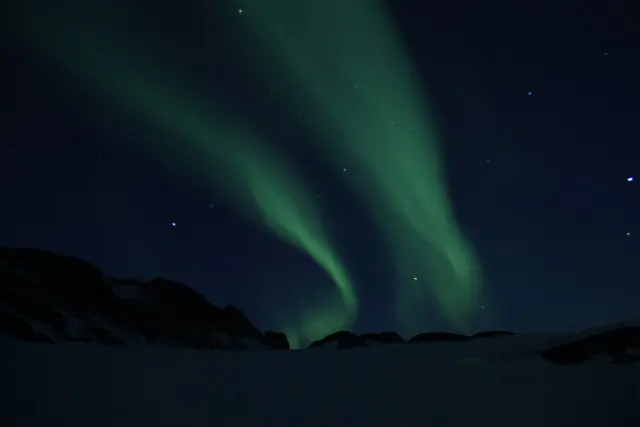
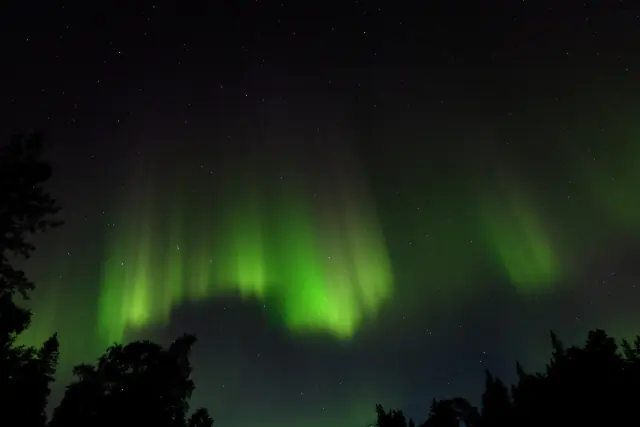
Under Saskatoon's immense prairie skies, the northern lights stretch from horizon to horizon in unbroken curtains of green — the flatlands offering a front-row seat to nature's greatest light show.
Aurora Over the Saskatchewan Prairies
Saskatoon at 52.13°N sits at a latitude where aurora with a KP index of 4 becomes visible — significantly more frequent than the KP 5 required in more southern prairie cities. The city's position on the northern Great Plains means the terrain is almost perfectly flat in every direction, providing unobstructed views of the aurora from its first appearance on the horizon to its peak overhead.
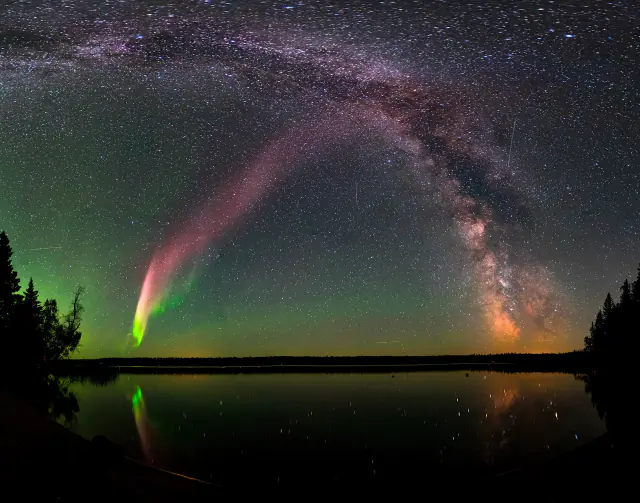
Saskatchewan is sometimes called the Land of Living Skies, and the description applies beautifully to aurora viewing. The province's famously enormous sky dome creates a feeling of being inside a planetarium when the northern lights are active — green arcs stretch across the full width of the sky, and during strong events, colors fill the entire celestial hemisphere.
The surrounding prairies have minimal light pollution beyond the city itself. Small farming communities are widely scattered, and the agricultural landscape provides vast stretches of darkness just minutes from the city limits.
Best Viewing Locations Near Saskatoon
Blackstrap Provincial Park, about 40 minutes south of Saskatoon, provides a convenient dark-sky location with lakeside viewing opportunities. The park's elevated terrain around the reservoir offers panoramic prairie views in every direction.
The rural roads north of Saskatoon toward Prince Albert provide progressively darker conditions. Simply driving 20-30 minutes on any grid road takes you into remarkably dark agricultural landscape. The Saskatchewan River valley near Batoche National Historic Site adds historical interest to aurora outings.
Pike Lake Provincial Park west of the city and the Cranberry Flats Conservation Area south of Saskatoon along the river both offer accessible viewing with natural surroundings. For the darkest conditions, the Cypress Hills (3.5 hours southwest) is Canada's first Dark Sky Preserve, though it requires a dedicated trip.
Practical Tips for Aurora in Saskatoon
Saskatoon John G. Diefenbaker International Airport (YXE) has flights from Toronto, Calgary, Vancouver, and other Canadian cities. The city offers good accommodation and dining options. Car rental is essential for reaching dark-sky locations.
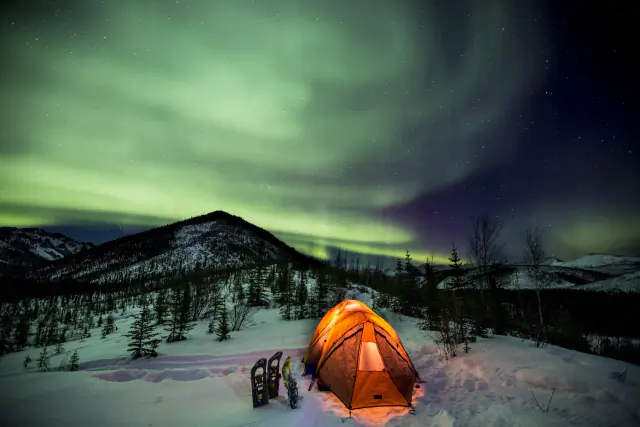
Saskatchewan winters are cold and dry, with temperatures regularly dropping to -25°C to -35°C. The dry prairie air tends to produce clear skies more often than humid climates, which is an advantage for aurora viewing. However, the lack of shelter from wind means wind chill is a significant factor.
The Saskatoon Centre of the Royal Astronomical Society of Canada is an excellent resource for local viewing tips, dark-sky locations, and aurora alerts. The organization hosts regular observing events and can point visitors to the best current conditions.
Plan the trip
Getting to Saskatoon
Aurora trips need three things booked together: a flight into the right airport, somewhere dark to stay, and usually a car, because the sky you get is the sky above wherever you can drive to that night.
Compare flightsLive fares into Saskatoon John G. Diefenbaker International Airport (YXE), the closest airport to Saskatoon.
Affiliate links. Booking through them costs you nothing extra and helps keep this site running.
Borealis App
Aurora forecasts, social feed & Hunter Ranks
Frequently Asked Questions
Saskatoon sees visible aurora approximately 20-30 times per season from dark locations outside the city. At KP 4, which occurs frequently during active solar periods, the aurora is visible from the rural prairies surrounding the city. Strong displays (KP 6+) reach overhead several times per year.
The flat terrain provides completely unobstructed horizons in every direction, the dry continental climate produces frequent clear skies, light pollution drops off rapidly outside the cities, and the latitude (52°N) is far enough north for regular aurora activity at KP 4.
Just 20-30 minutes outside the city on any rural road brings you to impressively dark conditions. The prairies are sparsely populated, so light pollution from Saskatoon fades quickly. For the very darkest skies, 45-60 minutes provides Bortle class 3-4 conditions.
During strong events (KP 6+), the aurora is visible from within the city, particularly from parks along the South Saskatchewan River. However, the full beauty of the display — including faint structures, colors, and subtle movement — is best appreciated from dark locations outside the city.
Related Articles
Destination
Northern Lights in Edmonton
Edmonton, Alberta's capital, is one of the northernmost major cities in Canada at 53°N. This position gives Edmonton a g...
Destination
Northern Lights in Winnipeg
Winnipeg, Manitoba's capital, sits at the heart of the Canadian prairies and offers surprising aurora viewing potential....
Destination
Northern Lights in Calgary
Calgary, Alberta's largest city, serves as the main gateway to the Canadian Rockies and offers occasional northern light...