Northern Lights Destination
Northern Lights in Greenland
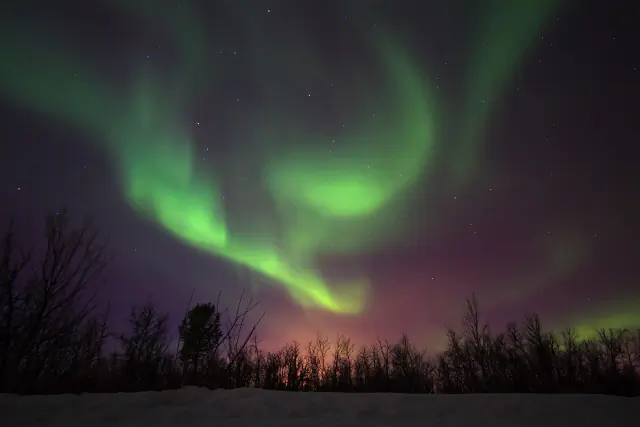
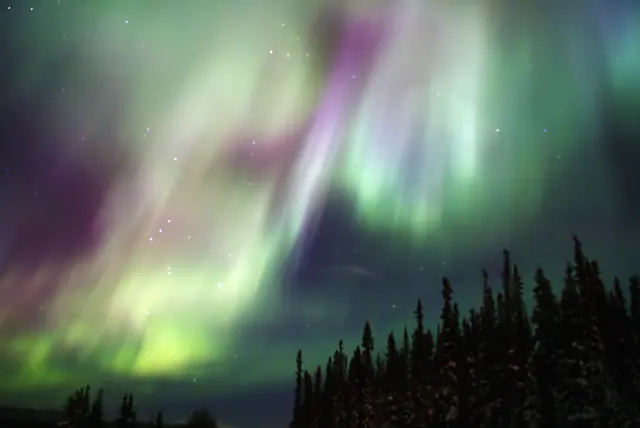
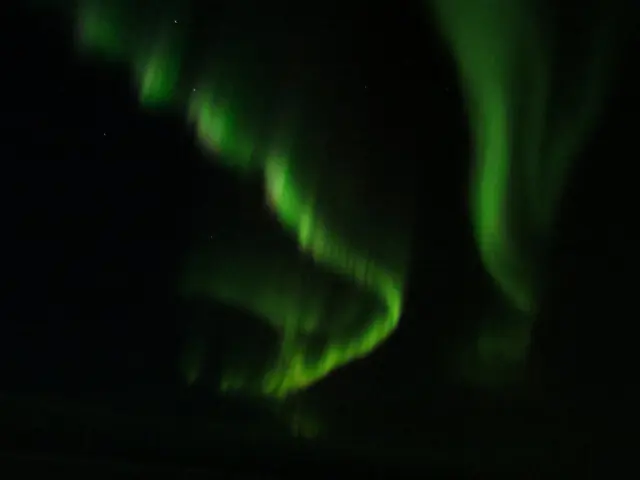
Greenland strips aurora viewing to its purest essence: you, the ice, and the lights. With a population of just 56,000 spread across the world's largest island, Greenland offers an Arctic solitude that no other destination can match. When the aurora ignites above the Ilulissat Icefjord or the vast ice sheet interior, you witness a spectacle virtually unchanged since the last ice age.
Why Greenland Offers the Ultimate Aurora Experience
Greenland's credentials as an aurora destination are formidable. The island stretches from 60°N to 83°N, with most settlements positioned between 64°N and 77°N — directly beneath the auroral oval. The capital, Nuuk, sits at 64.2°N, while Kangerlussuaq (67°N) and Ilulissat (69.2°N) are even deeper into the prime aurora zone.
What makes Greenland extraordinary is its absolute darkness. The island's interior is covered by an ice sheet up to 3 km thick, uninhabited and unlit. Even in the coastal settlements, populations are so small (Kangerlussuaq has just 500 residents, Ilulissat 4,500) that light pollution is negligible. The result is skies of a darkness and clarity that most people have never experienced.
Kangerlussuaq holds a special place in aurora viewing history. Situated at the head of a 190 km fjord, deep inland from the coast, it enjoys a continental climate with remarkably clear skies — an average of 300 clear nights per year, one of the highest rates in the Arctic. During the aurora season, this translates to an extraordinary hit rate for northern lights viewing.
The icescape setting elevates Greenland's aurora above all competitors. Imagine the lights reflecting off the surface of the Greenland Ice Sheet, or dancing above icebergs the size of apartment buildings in the Ilulissat Icefjord (a UNESCO World Heritage Site). These are primal, ice-age landscapes that create a sense of witnessing something ancient and eternal.
When to See Northern Lights in Greenland
The Greenlandic aurora season runs from September through early April, with peak conditions from October through March. The island's high latitude ensures extended darkness throughout winter.
September and October bring the return of dark skies after the midnight sun season. The autumn equinox boosts aurora activity, and temperatures are still relatively moderate (-5°C to -15°C on the west coast). Early-season dog sledding and hiking are possible alongside aurora viewing.
November through February are the darkest months. In Ilulissat, the sun does not rise above the horizon from late November to mid-January, providing nearly 24 hours of potential aurora viewing. Temperatures drop to -20°C to -30°C, but Kangerlussuaq's dry continental air keeps skies remarkably clear. This period offers the most reliable aurora conditions.
March is considered the sweet spot by many. Daylight returns for spectacular blue-hour photography, temperatures moderate, and the spring equinox enhances geomagnetic activity. March is also prime dog-sledding season, when the sea ice is thick enough for extended expeditions and the returning light illuminates the ice landscape.
Greenland's weather varies significantly between locations. Kangerlussuaq (inland) has the driest, clearest weather. Ilulissat (coastal) experiences more cloud cover but offers iceberg backdrops. Nuuk (southwest coast) has the mildest weather but more precipitation. Check the aurora forecast and KP index — in Greenland, even KP 1-2 produces visible aurora.
Best Aurora Viewing Locations in Greenland
Kangerlussuaq — The undisputed aurora capital of Greenland. This former U.S. Air Force base sits inland at the head of a long fjord, creating a continental microclimate with approximately 300 clear nights per year. The flat, treeless tundra surrounding the settlement provides unobstructed 360-degree views. Dog sled tours to the edge of the ice sheet, combined with aurora viewing, are Kangerlussuaq's signature experience. The Old Camp area and the road toward the ice sheet (Point 660) are prime viewing spots.
Ilulissat — Home to the Ilulissat Icefjord, a UNESCO World Heritage Site where the Sermeq Kujalleq glacier calves icebergs into Disko Bay. Watching the aurora dance above these monumental icebergs — some towering 100 meters above the water — is one of the Arctic's most awe-inspiring spectacles. Ilulissat has better tourism infrastructure than Kangerlussuaq, with hotels, restaurants, and guided tours.
Nuuk — Greenland's capital and largest city (19,000 residents) offers the most accessible Greenlandic aurora experience. While it has the most light pollution of any Greenlandic town (still minimal by global standards), short drives into the surrounding fjord landscape reveal dark skies. Nuuk's advantage is its relatively mild climate, better air connections, and range of accommodation options.
Sisimiut — Greenland's second-largest town (5,500 residents) sits just north of the Arctic Circle and offers excellent aurora viewing with a backdrop of colorful Greenlandic houses and surrounding mountains. The Arctic Circle Trail, a 160 km hiking route between Sisimiut and Kangerlussuaq, passes through some of the most remote and pristine aurora viewing terrain on Earth.
Kulusuk — On Greenland's remote east coast, Kulusuk offers a dramatically different experience. The East Greenlandic landscape is more mountainous and rugged, with massive glaciers calving directly into the sea. Kulusuk's isolation (population 250) ensures absolute darkness and a profound sense of Arctic remoteness. Access is via Icelandair flights from Reykjavik.
Planning Your Greenland Aurora Trip
Understand Greenland's remoteness. This is not a destination for spontaneous travel. Flights are limited (Air Greenland from Copenhagen or Icelandair from Reykjavik), accommodation options are few, and infrastructure outside settlements is essentially nonexistent. Book flights and hotels well in advance, especially for peak aurora season.
Budget for a premium destination. Greenland is expensive. Flights from Copenhagen to Kangerlussuaq or Ilulissat cost 3,000-6,000 DKK round trip. Hotel accommodation ranges from 800-2,000 DKK per night. Guided aurora tours cost 500-1,500 DKK per person. Meals are pricey, with restaurant dinners averaging 200-400 DKK. The total cost for a 4-night Greenland aurora trip typically ranges from 15,000-25,000 DKK ($2,200-$3,600 USD) per person.
Dress for extreme cold. Greenland's winter temperatures, especially in Kangerlussuaq, can plunge to -30°C or below. Full Arctic gear is essential: expedition parka, insulated pants, Arctic-rated boots, heavy mittens, balaclava, and chemical warmers. Some tour operators provide or rent cold-weather gear.
Embrace the Inuit cultural experience. Greenlandic Inuit culture is rich and living. Dog sledding is not a tourist gimmick but a traditional transportation method still used by hunters. Try Greenlandic cuisine including musk ox, Arctic char, and dried fish. Visit the Ilulissat Museum or Nuuk's National Museum to learn about Greenland's history from ancient Thule culture to the present day.
Combine with Iceland. Many travelers pair a Greenland aurora trip with a few days in Iceland, taking advantage of Icelandair's Greenland flights from Reykjavik. This combination provides two distinct aurora destinations — volcanic Iceland and glacial Greenland — in a single trip.
Borealis App
Aurora forecasts, social feed & Hunter Ranks
Frequently Asked Questions
The primary route is flying Air Greenland from Copenhagen to Kangerlussuaq (4.5 hours) or Ilulissat (5 hours). Icelandair operates seasonal flights from Reykjavik to Ilulissat and Kulusuk (2-3 hours). There are no direct flights from North America. Internal Greenland flights connect the settlements. All travel to Greenland requires advance planning as flight frequencies are limited.
Yes, Kangerlussuaq is widely considered the best location due to its inland position and continental climate, which produces approximately 300 clear nights per year. The flat, dark tundra provides unobstructed viewing. However, Ilulissat offers the more spectacular visual setting with icebergs and the UNESCO-listed Icefjord, though it has more coastal cloud cover.
Very low levels are sufficient. At Greenland's latitude (64-77°N), even a KP index of 1-2 can produce visible aurora displays. KP 3-4 will typically produce vivid, dynamic displays. Greenland's advantage is that you rarely need a strong geomagnetic storm — the aurora is active overhead on most clear nights during the season.
Temperatures vary by location and month. Nuuk (southwest coast) is mildest, averaging -5°C to -10°C in winter. Ilulissat averages -10°C to -20°C. Kangerlussuaq (inland) is coldest, averaging -15°C to -30°C from December to February, with occasional dips to -40°C. Proper Arctic clothing is essential for all locations.
Yes, dog sled aurora tours are Greenland's signature experience. In Kangerlussuaq and Ilulissat, traditional Greenlandic dog sled teams take visitors into the wilderness during aurora season. Rides range from 2-hour evening excursions to multi-day expeditions across the tundra or sea ice. The combination of mushing through Arctic darkness while aurora dances overhead is unforgettable.
Greenland is an autonomous territory within the Kingdom of Denmark. EU/Schengen visa holders can visit Greenland, but Greenland is not part of the Schengen Area. Most visitors arrive via Copenhagen (Denmark) or Reykjavik (Iceland). Check visa requirements for your nationality — some nationalities that are visa-exempt for Denmark still require a separate visa for Greenland.
Related Articles
Destination
Northern Lights in Iceland
Iceland offers an otherworldly aurora borealis experience set against volcanic landscapes, glaciers, hot springs, and bl...
Destination
Northern Lights in Canada
Canada offers vast wilderness aurora viewing across its northern territories, from the aurora capital of Yellowknife to ...
Destination
Northern Lights in Denmark
Denmark's Faroe Islands, perched in the North Atlantic between Scotland and Iceland, offer a surprisingly compelling aur...