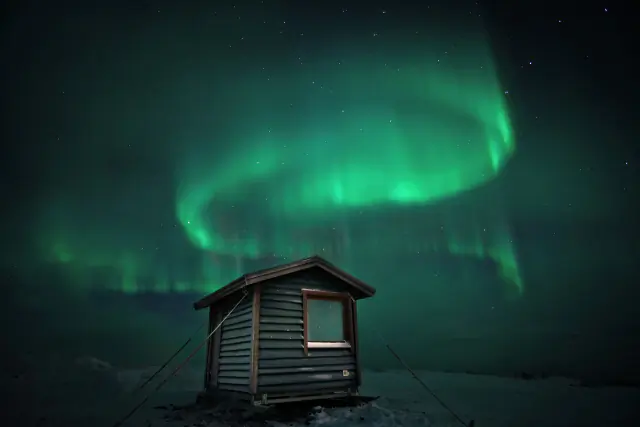
Northern Lights Destination
Northern Lights in Tromso, Norway
Experience the northern lights from the Gateway to the Arctic - Tromso offers world-class aurora viewing with the comforts of a modern city at 69°N latitude.
Why Tromso Is the World's Top Aurora Destination
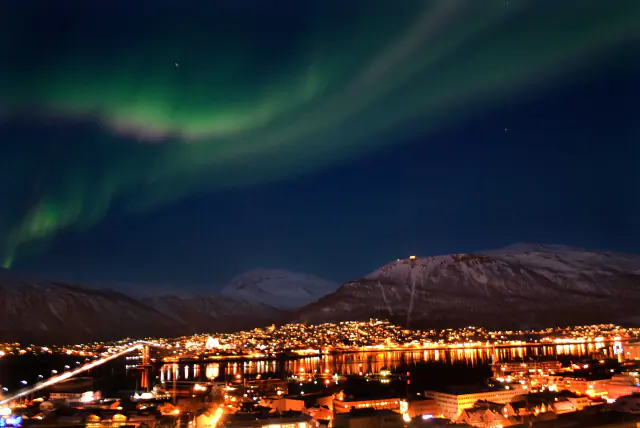
Tromso sits at 69.65°N latitude, placing it squarely within the auroral oval - the ring-shaped zone around the magnetic North Pole where northern lights activity is most frequent. Despite its extreme northern location, Tromso enjoys a surprisingly mild climate thanks to the Gulf Stream, with winter temperatures averaging around -4°C - far warmer than other destinations at similar latitudes.
What truly sets Tromso apart is its accessibility. With a major international airport, excellent infrastructure, and a thriving city center, you can enjoy fine dining, world-class museums, and a vibrant nightlife scene, then drive just 20 minutes outside the city to find pristine dark skies. The city's location on an island surrounded by fjords and mountains creates a dramatic natural amphitheater for aurora displays.
The aurora season in Tromso runs from September through March, with peak activity typically occurring from October through February. During these months, the long polar nights provide extended windows of darkness ideal for aurora viewing. Check the aurora forecast before heading out, and consider the KP index - Tromso needs only a KP 2 or above for visible displays.
Best Northern Lights Viewing Spots in Tromso
While you can sometimes spot the aurora from Tromso city center, the best experiences come from escaping the light pollution. Here are the top viewing locations:
Telegrafbukta Beach: Located at the southern tip of Tromso island, this beach offers open views to the north with minimal light interference. It's accessible by city bus, making it the easiest escape from downtown lights.
Kvaloya (Whale Island): Just a 20-minute drive from the city center across the Sandnessund Bridge, Kvaloya offers numerous pull-off points along the coastal road with spectacular views across open water - perfect for aurora reflections.
Ersfjordbotn: A small village on the west coast of Kvaloya, about 30 minutes from Tromso. The fjord provides a stunning foreground for aurora photography, and the surrounding mountains shield you from any stray light pollution.
Sommaroy: This picturesque fishing village, about 50 minutes west of Tromso, offers some of the darkest skies in the region. The white sand beaches create an otherworldly setting when the aurora appears overhead.
For a deeper understanding of what makes aurora visible at different locations, explore our aurora science guide. The extended Tromso region also offers additional viewing opportunities.
When to Visit Tromso for Northern Lights
The northern lights season in Tromso spans from late September to late March, but each month offers a distinct experience:
September-October: The season opener brings crisp autumn air and the return of dark nights after the midnight sun. September can still have some twilight interference, but October offers excellent darkness from around 6 PM. These months often have milder weather and fewer tourists.
November-January: The polar night (Morkertid) runs from November 21 to January 21, meaning the sun never rises above the horizon. While this sounds dramatic, it produces a beautiful blue twilight at midday and maximizes your potential viewing hours. This is peak aurora season.
February-March: As the sun returns, you get the best of both worlds - increasing daylight for daytime activities and still-long nights for aurora viewing. February and March often have the most stable weather, and solar activity tends to peak around the equinoxes.
For detailed monthly guidance, visit our best time to see the northern lights guide. To check conditions for your trip, use our tonight's aurora forecast.
Practical Tips for Aurora Hunting in Tromso
Getting There: Tromso Airport (TOS) receives direct flights from Oslo, Stockholm, London, and other European hubs. From the airport, it's a 15-minute bus ride or taxi to the city center.
Guided Tours vs. Self-Driving: Tromso offers dozens of aurora tour operators who use real-time weather data to chase clear skies - often driving 100+ km to find gaps in the clouds. Self-driving is also viable if you're comfortable driving in winter conditions. Rent a car with studded tires and carry warm clothing, snacks, and a fully charged phone.
What to Wear: Temperatures from November to February hover between -5°C and -10°C, but wind chill can make it feel much colder. Layer with thermal base layers, insulated mid-layers, and a windproof outer shell. Insulated boots rated to -30°C are essential when standing still for extended periods.
Photography: Bring a tripod and a camera capable of manual settings. Use ISO 1600-3200, aperture f/2.8 or wider, and shutter speeds of 5-15 seconds. See our comprehensive aurora photography guide for detailed camera settings and techniques.
Budget: Tromso is expensive by global standards. Budget around 1500-2500 NOK per night for mid-range accommodation. Aurora tours typically cost 1000-1500 NOK per person. Eating out averages 200-400 NOK for a main course.
Plan the trip
Getting to Tromso
Aurora trips need three things booked together: a flight into the right airport, somewhere dark to stay, and usually a car, because the sky you get is the sky above wherever you can drive to that night.
Compare flightsLive fares into Tromso Airport (TOS), the closest airport to Tromso.
Affiliate links. Booking through them costs you nothing extra and helps keep this site running.
Borealis App
Aurora forecasts, social feed & Hunter Ranks
Frequently Asked Questions
The peak months are October through February, with January and February often considered the best combination of long dark nights and clearer weather. However, September and March can also produce spectacular displays, especially around the equinoxes when geomagnetic activity tends to increase.
Yes, it's possible during strong displays (KP 4+), but light pollution significantly reduces visibility. For the best experience, head at least 15-20 minutes outside the city to locations like Kvaloya, Ersfjordbotn, or Telegrafbukta Beach on the southern tip of the island.
We recommend staying at least 3-5 nights to maximize your chances. Statistically, you have roughly a 75% chance of seeing the aurora during a 3-night stay and over 90% during a 5-night stay, assuming you actively chase clear skies each evening.
Both options work well. Guided tours are ideal for first-time visitors as experienced guides know the best locations and can chase clear skies. However, renting a car and driving yourself gives more flexibility. The key is being willing to travel 30-100 km from the city to escape clouds.
Thanks to its location within the auroral zone at 69.65°N, Tromso only needs a KP index of 2 or above for visible aurora activity. Even KP 1 can produce faint displays overhead. During strong storms (KP 5+), the aurora can fill the entire sky with spectacular multi-colored curtains.
Tromso is surprisingly mild for its latitude thanks to the Gulf Stream. Winter temperatures typically range from -4°C to -10°C. With proper thermal clothing, including insulated boots, thermal layers, and a windproof jacket, the cold is very manageable. Tour operators often provide extra warm suits for their guests.
Related Articles
Destination
Northern Lights in Senja
Senja is Norway's second-largest island and one of its best-kept aurora secrets. With dramatic coastal scenery rivaling ...
Destination
Northern Lights in Tromso Region
The extended Tromso Region encompasses the fjords, islands, and mountains surrounding Norway's Arctic capital. This wide...
Destination
Northern Lights in Narvik
Narvik is a dramatic fjord town flanked by steep mountains and rich World War II history. Its sheltered position within ...