Northern Lights Destination
Northern Lights in New Hampshire White Mountains, United States
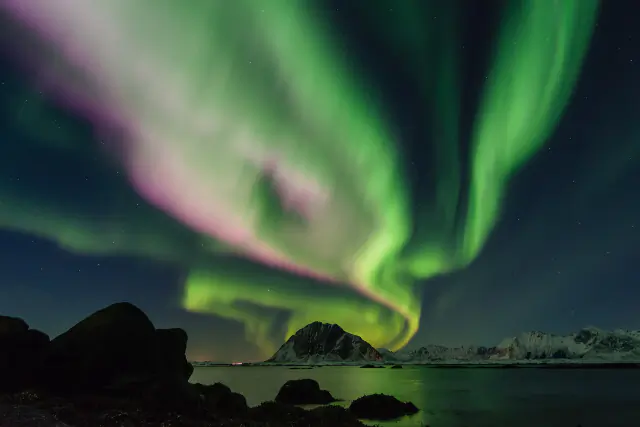
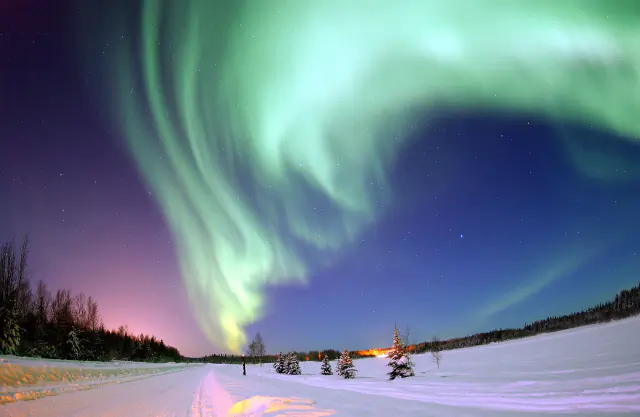
New Hampshire's White Mountains rise above the New England landscape, providing elevated dark-sky viewing where the northern lights dance above the Presidential Range.
Aurora Above the White Mountains
New Hampshire's White Mountains region at approximately 44°N requires a KP index of 6 for visible aurora. While this means displays are limited to strong geomagnetic events, the White Mountains' dramatic scenery and elevated viewing positions make each occurrence spectacular.
The Presidential Range, including Mount Washington (6,288 feet), the highest peak in the northeastern US, provides viewpoints above the tree line and often above the cloud layer. At summit elevation, the sky darkness improves significantly, and the mountain terrain creates dramatic foreground compositions.
The White Mountains' well-developed tourism infrastructure — ski resorts, inns, restaurants — makes it a comfortable base for aurora watching, with world-class hiking and skiing to fill the days while waiting for geomagnetically active nights.
Best Viewing Spots in New Hampshire
Mount Washington Auto Road (seasonal) provides access to the summit with panoramic views in all directions. When open, this is the premier aurora vantage point in the northeast. Crawford Notch State Park offers accessible mountain-framed views from the valley floor.
Franconia Notch State Park provides dramatic cliff faces and the Cannon Mountain tramway for elevated viewing. The Kancamagus Highway between Lincoln and Conway offers numerous pull-offs with mountain views in a dark corridor.
The Great North Woods region north of the White Mountains (Colebrook, Pittsburg) provides New Hampshire's darkest skies and most northerly latitude, approaching 45°N. Lake Umbagog and Connecticut Lakes offer remote wilderness viewing.
Planning Aurora Viewing in New Hampshire
The nearest major airports are Manchester (MHT) in southern New Hampshire and Portland (PWM) in Maine. Burlington, VT (BTV) serves the western approach. The White Mountains are approximately 2-3 hours from these airports.
Accommodation includes grand mountain resorts, ski lodges, inns, and B&Bs. North Conway and Lincoln are the main tourist hubs. The White Mountains have a vibrant year-round tourism scene with excellent dining options.
New Hampshire winters are cold and snowy (-10°C to -5°C in the valleys, much colder on the summits). Mount Washington holds the record for the fastest wind ever measured on a surface station (231 mph). While summit conditions are extreme, valley and lower-elevation viewing is very manageable with proper winter clothing.
Plan the trip
Getting to New Hampshire White Mountains
Aurora trips need three things booked together: a flight into the right airport, somewhere dark to stay, and usually a car, because the sky you get is the sky above wherever you can drive to that night.
Compare flightsLive fares into Manchester-Boston Regional Airport (MHT), the closest airport to New Hampshire White Mountains.
- Where to stayNew Hampshire White Mountains has few listed hotels, so this compares places to stay around Maine Aroostook County, the main base nearby.
- Car hireChasing clear skies means driving. Pick up at Manchester-Boston Regional Airport.
- Guided toursAurora chases and activities around New Hampshire White Mountains.
Affiliate links. Booking through them costs you nothing extra and helps keep this site running.
Borealis App
Aurora forecasts, social feed & Hunter Ranks
Frequently Asked Questions
Yes, during strong geomagnetic events (KP 6+). The White Mountains and Great North Woods offer the best conditions. Events producing visible aurora occur roughly 5-10 times per year during solar maximum. Southern New Hampshire sees aurora much less frequently.
When accessible, Mount Washington's summit provides the highest viewpoint in the northeast and exceptional sky darkness. However, the summit is only accessible by auto road (seasonal, not winter) or on foot. The mountain's extreme weather can make summit conditions dangerous.
The Great North Woods region (Pittsburg, Colebrook area) has the darkest skies, approaching Bortle class 3. The White Mountains proper have good darkness in the interior (Kancamagus Highway area), while the ski towns have more light pollution.
The equinox periods (September-October and March) bring the most geomagnetic activity. Fall foliage season (late September-early October) overlaps with aurora season for spectacular combined viewing. Winter offers the longest nights but the coldest conditions.
Related Articles
Destination
Northern Lights in Vermont Green Mountains
Vermont's Green Mountains provide a surprisingly good aurora viewing destination in New England. The state's commitment ...
Destination
Northern Lights in Maine Aroostook County
Maine's Aroostook County, the largest county east of the Mississippi, offers the best northern lights viewing in the nor...
Destination
Northern Lights in Michigan Upper Peninsula
Michigan's Upper Peninsula, surrounded by the Great Lakes, is one of the best places in the Lower 48 to see the northern...