Northern Lights Destination
Northern Lights in Vermont Green Mountains, United States
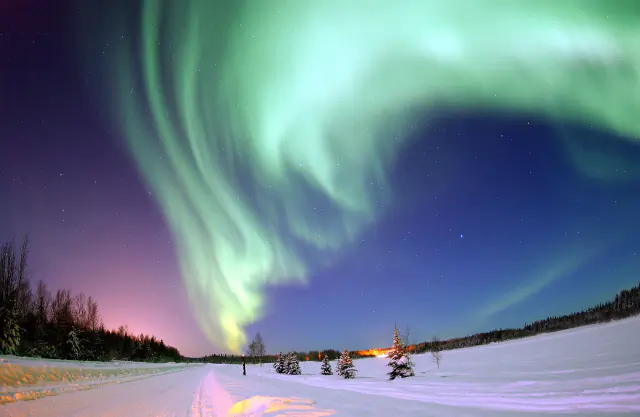
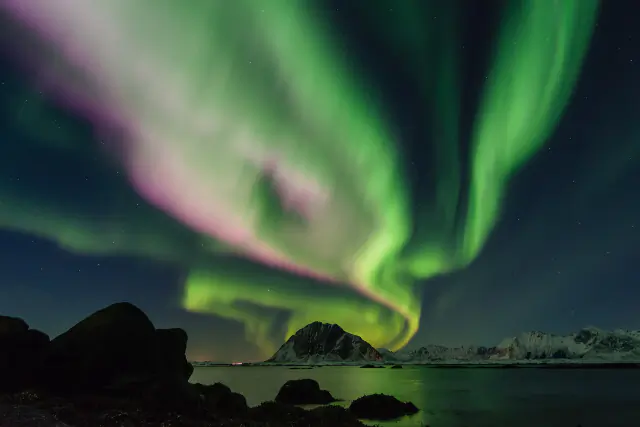
Vermont's Green Mountains and pastoral valleys create one of New England's best aurora stages — where rural dark skies and charming villages meet the northern lights.
Northern Lights in the Green Mountain State
Vermont at 44.56°N requires a KP index of 6 for visible aurora, placing it in the 'strong event' category. While this means aurora is less frequent than in Minnesota or Michigan, Vermont benefits from its rural character and dark skies. The state has no billboards, strict development controls, and a sparse population that keeps night skies remarkably dark for the eastern US.
When geomagnetic storms push the aurora south, Vermont's mountain terrain and pastoral valleys provide stunning foregrounds. Church steeples, covered bridges, and red barns silhouetted against green aurora create quintessentially New England aurora photographs.
Vermont's accessible location within a day's drive of major northeastern cities (Boston, New York, Montreal) makes it a practical aurora destination for millions of potential viewers. When a strong storm is forecast, a quick drive to northern Vermont can yield impressive results.
Best Viewing Spots in Vermont
Northeast Kingdom (NEK) in Vermont's northeast corner provides the darkest skies in the state. The towns of Island Pond, Jay, and Burke are surrounded by forests and farmland with minimal light pollution. The NEK's position is Vermont's closest approach to 45°N.
Hazen's Notch and Jay Peak area provide elevated mountain viewpoints with northern horizons. Stowe and the Mount Mansfield area offer aurora viewing from Vermont's highest peak region, though the ski resort brings some light pollution.
The Lake Champlain shoreline provides open water views to the north and west. Burton Island State Park and Grand Isle on the lake offer dark, water-surrounded viewing. Rural roads throughout the Lamoille Valley and Orleans County provide easy pull-off locations with open northern horizons.
Practical Tips for Vermont Aurora Viewing
Burlington International Airport (BTV) is the state's main airport, with flights from major northeastern cities. The Northeast Kingdom is about 1.5-2 hours from Burlington. Vermont is also easily accessible by car from Boston (3-4 hours to Burlington), New York (5-6 hours), and Montreal (1.5 hours).
Vermont offers charming accommodation — country inns, B&Bs, ski lodges, and vacation rentals. The state's food and craft beer scene is excellent, with farm-to-table restaurants and numerous breweries. Winter brings skiing, which combines well with evening aurora watching.
Vermont winters are cold and snowy (-10°C to -5°C) with excellent winter sports conditions. The state is well-equipped for winter, with plowed roads and winter tourism infrastructure. Monitor space weather forecasts and be ready to drive to northern Vermont when KP 6+ events are predicted.
Plan the trip
Getting to Vermont Green Mountains
Aurora trips need three things booked together: a flight into the right airport, somewhere dark to stay, and usually a car, because the sky you get is the sky above wherever you can drive to that night.
Compare flightsLive fares into Burlington International Airport (BTV), the closest airport to Vermont Green Mountains.
- Where to stayVermont Green Mountains has few listed hotels, so this compares places to stay around Maine Aroostook County, the main base nearby.
- Car hireChasing clear skies means driving. Pick up at Burlington International Airport.
- Guided toursAurora chases and activities around Vermont Green Mountains.
Affiliate links. Booking through them costs you nothing extra and helps keep this site running.
Borealis App
Aurora forecasts, social feed & Hunter Ranks
Frequently Asked Questions
Vermont sees visible aurora roughly 5-10 times per year during active solar periods, primarily from the Northeast Kingdom and northern tier. Strong overhead displays (KP 7+) occur perhaps 2-4 times per year. Solar maximum years significantly increase frequency.
The Northeast Kingdom (NEK) in Essex, Orleans, and Caledonia counties has the darkest skies, with Bortle class 3-4 conditions common. The area around Island Pond, Victory, and Granby is particularly dark. The Lake Champlain islands also offer dark conditions.
During strong events (KP 7+), faint aurora can be visible from Burlington's waterfront with a clear northern horizon across Lake Champlain. However, the city's light pollution limits the experience. Driving 30-60 minutes east into the rural hills significantly improves viewing.
Vermont is excellent for aurora photography when the lights reach this latitude. Covered bridges, church steeples, and red barns provide quintessentially New England foregrounds. The fall foliage season (September-October) overlaps with aurora season for stunning combined compositions.
Related Articles
Destination
Northern Lights in New Hampshire White Mountains
New Hampshire's White Mountains offer aurora viewing from the highest peaks in the northeastern United States. Mount Was...
Destination
Northern Lights in Maine Aroostook County
Maine's Aroostook County, the largest county east of the Mississippi, offers the best northern lights viewing in the nor...
Destination
Northern Lights in Michigan Upper Peninsula
Michigan's Upper Peninsula, surrounded by the Great Lakes, is one of the best places in the Lower 48 to see the northern...