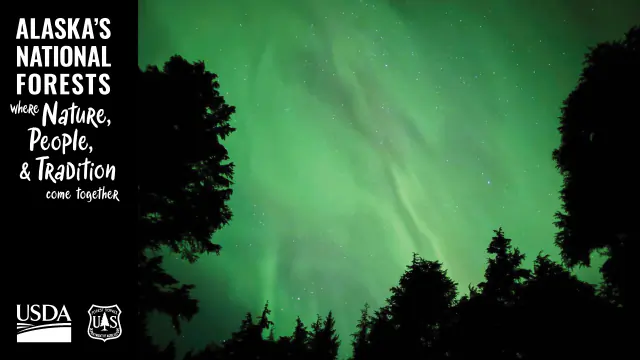
Northern Lights Destination
Northern Lights in Utqiagvik (Barrow), Alaska
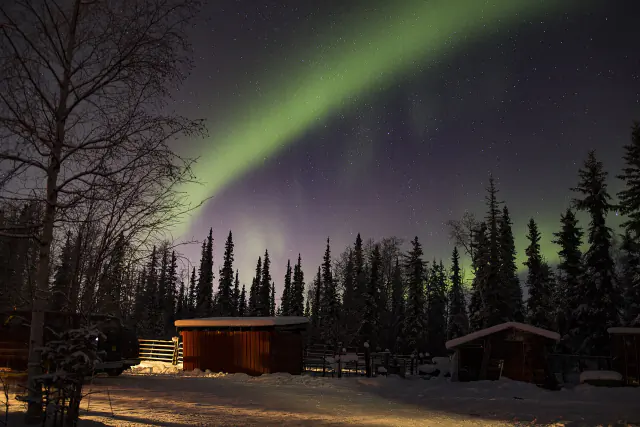
At the top of America, Utqiagvik offers aurora viewing of staggering intensity — the northernmost US city sits so deep within the auroral oval that even whispers of solar wind paint the sky.
Aurora at America's Northern Tip
Utqiagvik at 71.29°N is the northernmost city in the United States, situated on the Arctic Ocean coast above the Arctic Circle. At this extreme latitude, the auroral oval passes almost directly overhead or even to the south during quiet conditions, meaning any geomagnetic activity at all (KP 0-1) produces visible aurora.
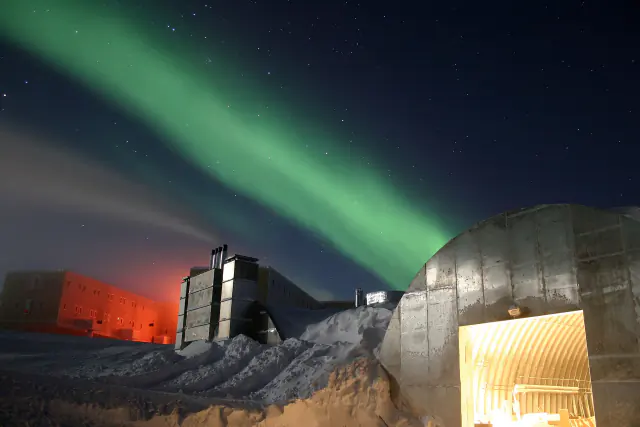
The experience here is fundamentally different from lower-latitude aurora viewing. Displays can appear in every direction — north, south, east, and west — as the auroral oval stretches across the entire sky. Strong events create the coveted aurora corona formation, where rays appear to converge at the zenith directly overhead, a phenomenon rarely seen at lower latitudes.
Utqiagvik also experiences polar night — the sun doesn't rise from mid-November through late January, providing over two months of continuous darkness ideal for aurora viewing at virtually any hour.
Viewing the Aurora in Utqiagvik
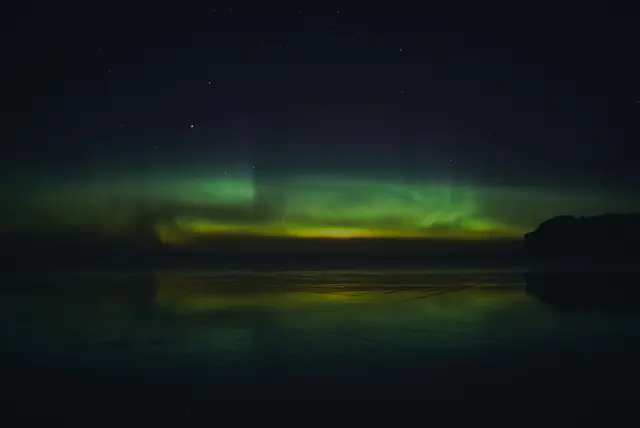
The Arctic Ocean coastline is the primary viewing area. Walking to the beach puts you at the edge of the frozen Arctic Ocean, with sea ice stretching to the horizon and aurora overhead. The flat terrain and lack of obstructions provide 360-degree sky access.
Point Barrow, the actual northernmost point of the US, lies a few miles northeast of town. During favorable conditions, traveling to the point (by snowmobile in winter) provides the ultimate extremity-of-the-continent aurora experience.
The town itself has minimal light pollution — Utqiagvik's population of about 4,400 produces a modest glow that doesn't significantly impact aurora viewing from anywhere in the community. Simply stepping outside your accommodation often suffices for impressive displays.
Getting to Utqiagvik and Essential Information
Utqiagvik is accessible only by air from Fairbanks or Anchorage via Alaska Airlines. Flights are expensive (often $600-1,000+ round trip from Fairbanks) and can be disrupted by Arctic weather. Book with flexibility and travel insurance.
Accommodation is very limited — the Top of the World Hotel and King Eider Inn are the primary options. Dining and services are basic and expensive. This is a working Arctic community, not a tourist destination, so manage expectations regarding amenities.
Winter conditions are extreme — temperatures reach -30°C to -45°C with brutal wind chill from Arctic Ocean winds. Full expedition-grade cold-weather gear is essential. Polar bear awareness is critical — bears are present in the area, especially along the coast. Never wander far from town alone, and local guide services are strongly recommended.
Respect the Inupiat community and culture. Utqiagvik is home to people who have lived in the Arctic for thousands of years. Follow local customs, ask permission before photographing people or cultural sites, and support local businesses.
Plan the trip
Getting to Utqiagvik (Barrow)
Aurora trips need three things booked together: a flight into the right airport, somewhere dark to stay, and usually a car, because the sky you get is the sky above wherever you can drive to that night.
Compare flightsLive fares into Wiley Post-Will Rogers Memorial Airport (BRW), the closest airport to Utqiagvik (Barrow).
Affiliate links. Booking through them costs you nothing extra and helps keep this site running.
Borealis App
Aurora forecasts, social feed & Hunter Ranks
Frequently Asked Questions
For dedicated aurora enthusiasts, Utqiagvik offers an unmatched experience — aurora visible at KP 0, potential 360-degree displays, and the unique setting of the Arctic Ocean. However, it's expensive, remote, extremely cold, and has minimal tourist infrastructure. Most visitors find Fairbanks a more practical choice.
November through January during polar night provides continuous darkness for aurora viewing at any hour. February and March offer returning twilight with continued long dark periods. September and October are viable with milder temperatures but shorter dark hours.
Yes. Polar bears are present in and around Utqiagvik, particularly along the coast. Never go far from town alone, especially in darkness. Local residents carry firearms for protection. Visitors should hire local guides for excursions and stay aware of their surroundings.
From approximately November 18 to January 23, the sun does not rise above the horizon. During the depth of polar night (late December), only a few hours of dim twilight brighten the southern sky around midday. The rest is continuous darkness — ideal for aurora but psychologically challenging for visitors used to normal day-night cycles.
Related Articles
Destination
Northern Lights in Fairbanks
Fairbanks is the undisputed aurora capital of the United States. Located in interior Alaska at nearly 65°N, this city si...
Destination
Northern Lights in Inuvik
Inuvik sits just above the Arctic Circle in the Northwest Territories, making it one of the northernmost accessible comm...
Destination
Northern Lights in Coldfoot
Coldfoot, a tiny truck stop community on the Dalton Highway above the Arctic Circle, offers one of the most remote and p...