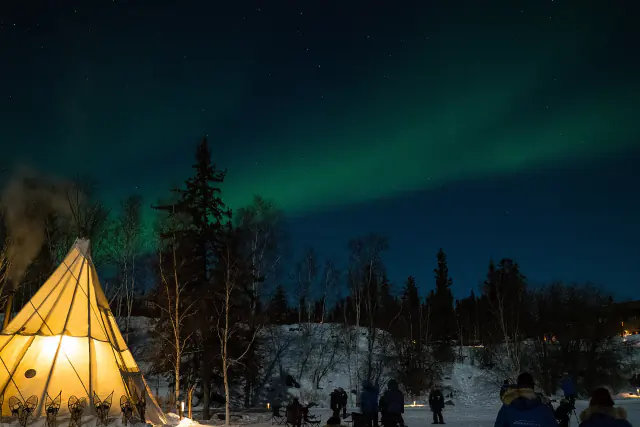
Northern Lights Destination
Northern Lights in Jasper, Canada
Jasper National Park is the world's second-largest Dark Sky Preserve — where Rocky Mountain grandeur meets some of the darkest skies in Canada for unforgettable aurora displays.
Jasper: A World-Class Dark Sky Preserve
In 2011, Jasper National Park was designated the world's second-largest Dark Sky Preserve by the Royal Astronomical Society of Canada, encompassing over 11,000 square kilometers of protected dark sky. This designation means the park actively works to reduce light pollution, and the results are breathtaking — on clear nights, the Milky Way blazes overhead and faint celestial objects invisible from urban areas are clearly visible to the naked eye.
For aurora viewing, this darkness is invaluable. While Jasper at 52.87°N requires a KP index of about 4 for visible displays, the park's exceptionally dark skies mean that even moderate aurora activity appears vivid and colorful. Faint structures and subtle hues that would be washed out by light pollution elsewhere are clearly visible here.
Every October, the park hosts the Jasper Dark Sky Festival, a multi-day celebration featuring astronomy presentations, astrophotography workshops, and special aurora viewing events. The festival draws experts and enthusiasts from across Canada and is timed to coincide with the autumn aurora season.
Best Aurora Viewing Locations in Jasper
Pyramid Lake is arguably the most iconic aurora viewing location in the Canadian Rockies. The lake's Pyramid Island, connected by a photogenic wooden bridge, creates a composition that has graced countless aurora photographs. On a calm night with the northern lights reflected in the lake's surface and Pyramid Mountain looming behind, the scene is almost impossibly beautiful.
Maligne Lake, the largest natural lake in the Canadian Rockies, offers a remote and pristine viewing environment about 45 minutes from Jasper town. The Spirit Island viewpoint, famous in Canadian landscape photography, can combine with aurora for extraordinary compositions, though reaching it requires a boat trip.
The Medicine Lake area along Maligne Lake Road is popular with local aurora chasers for its open sky views and dark conditions. Athabasca Falls provides a dramatic waterfall foreground, while Old Fort Point near the town offers an accessible elevated viewpoint with panoramic mountain views.
Along the Icefields Parkway (Highway 93), numerous pull-offs between Jasper and the Columbia Icefields provide some of the darkest sky conditions in the park, far from any town lighting.
When to Visit Jasper for the Northern Lights
The prime aurora season in Jasper runs from September through April. The autumn equinox period in late September and the spring equinox in late March are statistically the most geomagnetically active times, increasing the odds of reaching the KP 4+ threshold Jasper requires.
Winter months from December through February offer the longest nights with up to 16 hours of darkness. However, Jasper's location near the Rocky Mountain continental divide means winter cloud cover can be persistent. Checking multiple weather forecasts and being flexible with your plans is key to success.
October is a favorite month for many visitors, combining the Jasper Dark Sky Festival with autumn colors and moderate temperatures. The larch forests along the Icefields Parkway turn golden in early October, providing a stunning foreground for aurora photography on the rare occasions when the lights appear above the fall foliage.
Getting to Jasper and Travel Tips
Jasper is located 3.5 hours west of Edmonton via Highway 16, or about 4 hours north of Banff along the spectacular Icefields Parkway. Edmonton International Airport (YEG) is the closest major airport. Car rental is essential for reaching viewing spots within the park.
Accommodation in the town of Jasper ranges from the historic Fairmont Jasper Park Lodge to budget hostels and campgrounds. Booking well in advance is essential during peak season (October and December–March). For the most immersive experience, consider staying at a backcountry lodge or wilderness cabin.
A Parks Canada pass is required for entry. Wildlife is abundant — elk wander through town, and bears, wolves, and cougars inhabit the park. Exercise caution when viewing aurora from remote locations at night, carry bear spray, and let someone know your plans. The park road to Maligne Lake is closed to vehicles in winter, so plan alternative viewing locations during those months.
Plan the trip
Getting to Jasper
Aurora trips need three things booked together: a flight into the right airport, somewhere dark to stay, and usually a car, because the sky you get is the sky above wherever you can drive to that night.
Compare flightsLive fares into Edmonton International Airport (YEG), the closest airport to Jasper.
Affiliate links. Booking through them costs you nothing extra and helps keep this site running.
Borealis App
Aurora forecasts, social feed & Hunter Ranks
Frequently Asked Questions
Jasper has darker skies due to its Dark Sky Preserve status, is slightly further north (53°N vs 51°N), and is further from Calgary's light dome. Jasper requires approximately KP 4 compared to Banff's KP 5, giving it more viewing opportunities. Banff offers more dramatic individual mountain backdrops like Mount Rundle.
The Jasper Dark Sky Festival is an annual multi-day event held each October celebrating the park's Dark Sky Preserve status. It features astronomy presentations, astrophotography workshops, telescope viewing sessions, indigenous star lore, and guided aurora viewing events. It's one of the largest dark sky festivals in Canada.
During strong geomagnetic events (KP 6+), the aurora can be visible from within the town. However, for the best experience, drive 10-20 minutes to locations like Pyramid Lake, Old Fort Point, or Medicine Lake where the darker skies allow you to see much more detail and color in the display.
Plan at least 3-4 nights to account for cloud cover and the need for elevated KP index conditions. Jasper requires KP 4+, which occurs on roughly 30-40% of nights during active solar periods. Longer stays significantly improve your chances of catching a display.
The Icefields Parkway is a well-maintained highway, but drive cautiously at night. Wildlife including elk, deer, and occasionally bears can be on the road. In winter, the road can be icy. Use pull-offs for viewing — never stop in travel lanes. Cell service is limited, so carry a satellite communicator for emergencies.
Related Articles
Destination
Northern Lights in Banff
Banff National Park in the Canadian Rockies combines world-class mountain scenery with surprising northern lights potent...
Destination
Northern Lights in Edmonton
Edmonton, Alberta's capital, is one of the northernmost major cities in Canada at 53°N. This position gives Edmonton a g...
Destination
Northern Lights in Calgary
Calgary, Alberta's largest city, serves as the main gateway to the Canadian Rockies and offers occasional northern light...