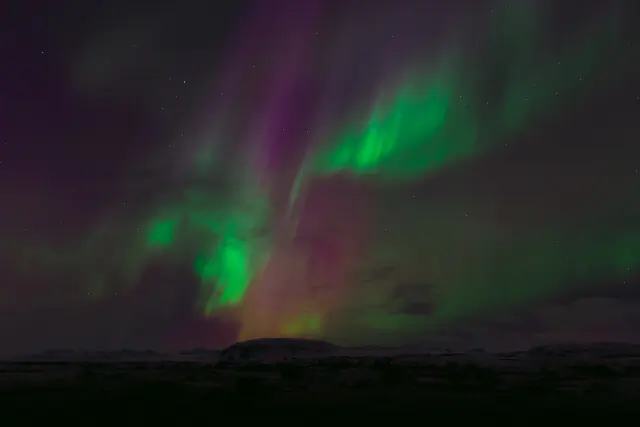
Northern Lights Destination
Northern Lights in Oslo, Norway
Norway's capital occasionally witnesses the aurora borealis during powerful solar storms - a rare and unforgettable experience for residents and visitors alike.
Northern Lights in Oslo: Chasing a Rare Spectacle
Oslo sits at 59.91°N - the southern limit of practical aurora observation. The Norwegian capital needs a KP index of 6 or higher to see northern lights, which represents a severe geomagnetic storm. These events are relatively rare, occurring perhaps 5-15 times per year even during solar maximum, and Oslo's urban light pollution further limits visibility.
Despite these challenges, Osloans are passionate aurora watchers. During major solar storms, social media buzzes with excitement as residents climb to hilltop viewpoints and head to the Nordmarka forest. The combination of the city's high latitude (further north than almost any other European capital except Helsinki and Reykjavik) and Norway's aurora-watching culture means that when conditions align, thousands of people witness the display.
For dedicated northern lights trips, head to Tromso, Lofoten, or other destinations in northern Norway. But if you're in Oslo and the aurora forecast shows KP 6+, it's worth staying up late.
Best Places to See Aurora Near Oslo
Nordmarka Forest: Oslo's vast northern forest offers the darkest skies accessible from the city. Drive or take the metro to Frognerseteren, then find a clearing with north-facing views. The forest lakes provide reflection opportunities, and you're only 30 minutes from the city center.
Ekebergparken: This sculpture park on a hilltop east of the city center offers elevated views to the north over the Oslofjord. While city lights are still visible, the northern horizon can be dark enough to catch strong aurora displays.
Sognsvann: The lake at the end of metro line 5 is surrounded by forest and offers relatively dark conditions for a location within Oslo's city limits. North-facing views across the lake provide a good aurora watching angle.
Hadeland/Ringerike: Driving 1-1.5 hours northwest of Oslo into the Hadeland or Ringerike districts significantly reduces light pollution. The rural landscapes with farmland, forests, and lakes create pleasant aurora viewing environments during strong storms.
When to See Northern Lights in Oslo
Aurora sightings in Oslo require both a strong geomagnetic storm and clear skies:
Best Months: October through February offer the darkest nights. The equinox months (September-October and March) statistically bring more geomagnetic storms, potentially increasing chances. January and February combine long nights with occasional clear, cold high-pressure weather systems.
Solar Cycle: Oslo's aurora visibility is heavily dependent on the solar cycle. During solar maximum years, severe storms (KP 6+) occur more frequently, and occasionally extreme storms (KP 8-9) bring spectacular aurora visible even from light-polluted urban centers.
Time of Night: When aurora does reach Oslo's latitude, it typically appears between 10 PM and 2 AM. Look to the northern horizon for a greenish glow that may develop into visible curtains or pillars during very strong events. Subscribe to aurora alerts for timely notifications.
Tips for Oslo Aurora Watchers
Be Prepared: Aurora in Oslo is opportunistic, not planned. Keep warm clothing in your car, have your camera ready, and know your escape-from-city-lights route. When an alert comes, you might have only 1-2 hours of peak activity.
Camera Essential: At Oslo's latitude, aurora is often too faint for the naked eye to see dramatic colors. A camera with long exposure capability (15-30 seconds) can reveal greens and sometimes reds that your eyes might miss. Even smartphone night modes can capture aurora during strong events. See our photography guide for settings.
Use Oslo as a Gateway: Oslo's excellent airport (OSL Gardermoen) connects to Tromso, Bodo, Alta, and other northern Norwegian cities with multiple daily flights. If you're visiting Oslo and want guaranteed aurora, add a 2-3 night extension to a northern destination.
Other Oslo Winter Activities: If aurora doesn't cooperate, Oslo offers world-class museums (Munch Museum, Viking Ship Museum, National Gallery), the Holmenkollen ski jump, cross-country skiing in Nordmarka, and a vibrant food scene. It's a fantastic winter destination regardless of aurora activity.
Plan the trip
Getting to Oslo
Aurora trips need three things booked together: a flight into the right airport, somewhere dark to stay, and usually a car, because the sky you get is the sky above wherever you can drive to that night.
Compare flightsLive fares into Oslo Airport Gardermoen (OSL), the closest airport to Oslo.
Affiliate links. Booking through them costs you nothing extra and helps keep this site running.
Borealis App
Aurora forecasts, social feed & Hunter Ranks
Frequently Asked Questions
Yes, but rarely. Oslo requires a KP index of 6 or higher (severe geomagnetic storm) for visible aurora. This happens perhaps 5-15 times per year during solar maximum, but cloud cover and light pollution further reduce actual sighting opportunities to just a few times per year at best.
Head to Nordmarka forest (30 minutes north by metro and walking), Sognsvann lake, or drive 1-1.5 hours northwest to the Hadeland/Ringerike area for darker skies. The key is getting away from city lights and finding a clearing with north-facing views.
If northern lights are a priority, absolutely. Flights from Oslo to Tromso take about 2 hours, and the aurora viewing is dramatically more reliable. Tromso needs only KP 2 compared to Oslo's KP 6 requirement, and the viewing season is much longer with more consistent displays.
When aurora reaches Oslo's latitude, it typically appears between 10 PM and 2 AM, though timing varies with the geomagnetic storm. Look to the northern horizon for a greenish glow. During extreme events (KP 8-9), aurora can appear overhead and be visible earlier in the evening.
Related Articles
Destination
Northern Lights in Bergen
Bergen, Norway's second-largest city, is not a traditional aurora destination, but during powerful geomagnetic storms, t...
Destination
Northern Lights in Tromso
Known as the Gateway to the Arctic, Tromso is the world's most popular destination for northern lights tourism. Situated...
Destination
Northern Lights in Lofoten
The Lofoten Islands offer one of the most photogenic northern lights experiences on Earth. Dramatic peaks rising from th...